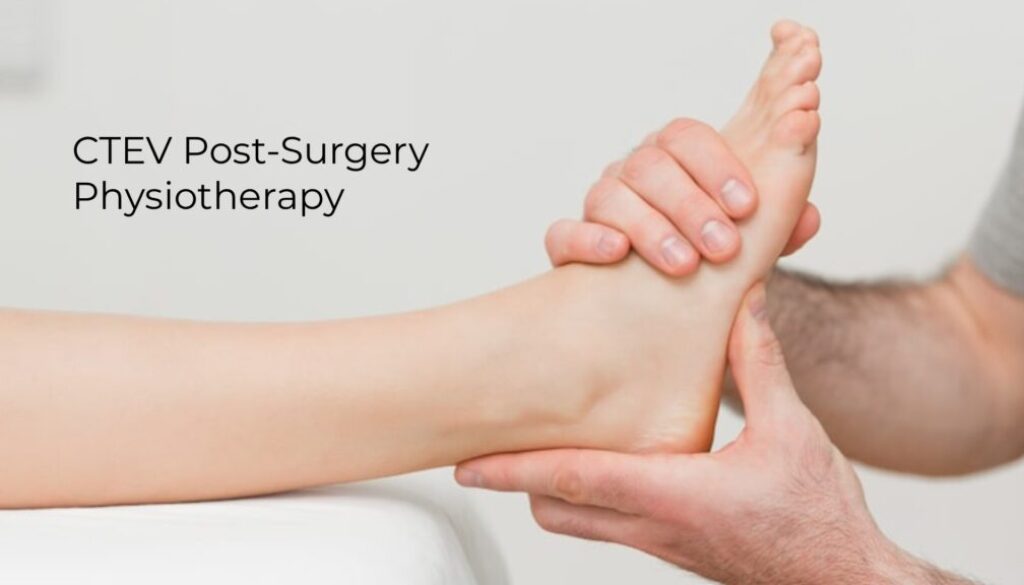
CTEV Post-Surgery Physiotherapy: Clubfoot Recovery Guide
When your child undergoes surgery for congenital talipes equinovarus (CTEV), commonly known as clubfoot, the journey to full recovery is just beginning. While surgical correction addresses the structural deformity, post-surgical physiotherapy is the cornerstone of successful long-term outcomes. Without proper rehabilitation, even the most successful surgery can result in stiffness, weakness, and functional limitations that affect your child’s ability to walk, run, and play normally.
This comprehensive guide explores everything parents, caregivers, and healthcare professionals need to know about CTEV post-surgical physiotherapy management—from understanding the condition and surgical intervention to implementing evidence-based rehabilitation protocols that maximize recovery and prevent complications.
Understanding CTEV (Clubfoot): What Parents Need to Know
Congenital talipes equinovarus is one of the most common congenital musculoskeletal deformities, affecting approximately 1 in every 1,000 live births in India. The condition presents at birth with the foot twisted inward and downward, making it impossible for the child to place their foot flat on the ground.
Key Characteristics of CTEV:
- Equinus: The heel is pulled upward (plantarflexed)
- Varus: The heel is turned inward
- Adductus: The forefoot curves inward
- Cavus: An abnormally high arch in the foot
CTEV can affect one foot (unilateral) or both feet (bilateral), with boys being affected twice as often as girls. In India, where delayed diagnosis and treatment remain challenges in rural areas, understanding the importance of timely intervention and comprehensive post-surgical care is critical.
Surgical Intervention for CTEV: When and Why
While the Ponseti method (serial casting followed by Achilles tenotomy and bracing) remains the gold standard for initial CTEV treatment with success rates exceeding 90%, some cases require surgical intervention:
Indications for CTEV Surgery:
- Resistant or atypical clubfoot unresponsive to Ponseti casting
- Relapsed clubfoot after conservative treatment
- Neglected clubfoot in older children (common in underserved Indian communities)
- Residual deformities requiring comprehensive surgical release
Common Surgical Procedures:
- Posteromedial Release (PMR): Releases tight soft tissues, tendons, and joint capsules
- Achilles Tendon Lengthening: Addresses severe equinus deformity
- Tibialis Anterior Tendon Transfer: Corrects muscle imbalances
- Osteotomies: Bony corrections for severe or neglected cases
Surgery typically involves 4-6 weeks of cast immobilization post-operatively, followed by a carefully structured physiotherapy programme that can span several months to years.
Why Post-Surgical Physiotherapy Is Non-Negotiable
Post-surgical physiotherapy for CTEV is not optional—it’s essential. Here’s why:
Prevention of Complications:
Without proper rehabilitation, children face:
- Joint stiffness and reduced range of motion
- Muscle weakness and atrophy
- Scar tissue adhesions
- Gait abnormalities and limping
- Secondary compensatory problems in knees, hips, and spine
- Increased risk of relapse (recurrence of deformity)
Functional Recovery Goals:
Structured clubfoot rehabilitation after surgery aims to:
- Restore full ankle and foot range of motion
- Strengthen weakened muscles progressively
- Improve balance, coordination, and proprioception
- Facilitate age-appropriate motor development
- Enable pain-free walking and running
- Prevent long-term disability
Research consistently shows that children who receive comprehensive post-operative physiotherapy for CTEV demonstrate significantly better functional outcomes, reduced relapse rates, and higher quality of life compared to those who receive surgery alone.
The Critical Rehabilitation Timeline: When Does Physiotherapy Begin?
Understanding the phases of CTEV recovery helps parents set realistic expectations and ensures adherence to the rehabilitation protocol.
Phase 1: Immediate Post-Operative Period (0-6 Weeks)
Timeline: Immediately after surgery until cast removal
Focus: Protection and early mobilization preparation
- The foot remains in a cast for 4-6 weeks post-surgery
- Gentle range of motion exercises for unaffected joints (hips, knees, toes if accessible)
- Education for parents on cast care, positioning, and signs of complications
- Pain management strategies
- Maintenance of general fitness and strength in unaffected limbs
Physiotherapy Involvement: Weekly or bi-weekly assessments, parent education
Phase 2: Early Mobilization Phase (6-12 Weeks Post-Surgery)
Timeline: After cast removal
Focus: Gentle mobilization and preventing stiffness
This is the most critical phase where intensive physiotherapy begins:
- Passive range of motion (PROM) exercises for ankle and foot joints
- Gentle stretching of tight structures while respecting surgical healing
- Scar tissue mobilization and massage techniques
- Introduction of active-assisted movements
- Custom splinting or orthotic prescription (often ankle-foot orthosis/AFO)
- Gradual weight-bearing as per surgical protocol
Physiotherapy Frequency: 3-5 sessions per week, with daily home exercises
Phase 3: Active Strengthening Phase (3-6 Months Post-Surgery)
Timeline: 3-6 months after surgery
Focus: Building strength and functional movement
- Progressive active range of motion exercises
- Targeted muscle strengthening (especially dorsiflexors, evertors, intrinsic foot muscles)
- Weight-bearing exercises and balance training
- Introduction of functional activities (standing, cruising, early walking)
- Continued stretching and flexibility work
- Gait training with appropriate assistive devices if needed
Physiotherapy Frequency: 2-3 sessions per week, comprehensive home programme
Phase 4: Functional Integration Phase (6-12 Months Post-Surgery)
Timeline: 6 months to 1 year and beyond
Focus: Normal movement patterns and prevention
- Advanced strengthening and endurance training
- Dynamic balance and proprioception exercises
- Sports-specific training (age-appropriate)
- Running, jumping, and play activities
- Gradual reduction of orthotic support (as appropriate)
- Long-term monitoring for relapse prevention
Physiotherapy Frequency: Weekly to monthly sessions, ongoing home exercises
Phase 5: Long-Term Monitoring (1+ Years)
Timeline: Ongoing through childhood growth spurts
Focus: Surveillance and optimization
- Periodic reassessment every 3-6 months
- Monitoring for growth-related complications
- Orthotic adjustments as the child grows
- Advanced functional activities and sports participation
- Education on self-management strategies
Evidence-Based Physiotherapy Techniques for CTEV Recovery
A comprehensive children clubfoot post-surgical care programme incorporates multiple therapeutic interventions tailored to the child’s age, surgical procedure, and recovery stage.
Manual Therapy Techniques
Joint Mobilization:
- Gentle oscillatory movements to subtalar, midtarsal, and ankle joints
- Improves joint nutrition, reduces stiffness, and restores normal arthrokinematics
- Must be performed by trained physiotherapists familiar with post-surgical precautions
Soft Tissue Mobilization:
- Scar tissue massage to prevent adhesions
- Myofascial release for tight calf, plantar fascia, and intrinsic foot muscles
- Promotes tissue extensibility and reduces pain
Stretching Protocols
Passive Stretching:
- Controlled, gentle stretching of gastrocnemius-soleus complex
- Forefoot adduction stretching
- Inversion/eversion mobilization
- Must be performed carefully to avoid overstretching healing surgical sites
Duration: Hold each stretch for 20-30 seconds, repeat 3-5 times, multiple times daily
Strengthening Exercises
Targeted Muscle Groups:
- Ankle Dorsiflexors (tibialis anterior): Essential for preventing foot drop
- Active dorsiflexion exercises
- Resistance band exercises (age-appropriate)
- Functional activities like toe-tapping games
- Foot Evertors (peroneals): Critical for preventing inversion recurrence
- Lateral foot movements against resistance
- Balance activities on unstable surfaces
- Intrinsic Foot Muscles: Improve foot stability and arch control
- Towel scrunches
- Marble pick-ups
- Toe spreading exercises
- Hip and Knee Stabilizers: Support overall lower limb function
- Mini-squats
- Step-ups (age-appropriate)
- Single-leg balance activities
Functional Training
Gait Re-education:
- Analysis and correction of abnormal walking patterns
- Progressive weight-bearing activities
- Use of parallel bars, walkers, or supportive equipment initially
- Gradual transition to independent walking
Balance and Proprioception:
- Single-leg stance (timed progression)
- Balance board activities
- Uneven surface walking
- Ball games that require dynamic balance
Age-Appropriate Play Activities:
- Crawling and climbing for toddlers
- Tricycle riding for preschoolers
- Skipping, hopping, and jumping for older children
- Sports participation with appropriate modifications
Orthotic Management
Ankle-Foot Orthosis (AFO):
- Custom-fitted devices that maintain surgical correction
- Prevent relapse while allowing functional movement
- Worn full-time initially, then night-time only
- Regular adjustments needed as child grows
Footwear Modifications:
- Specialized shoes that accommodate AFOs
- Proper sizing and support features
- Regular assessment to ensure optimal fit
CTEV Recovery Exercises: A Home Programme for Parents
Home-based management is equally important as clinic-based physiotherapy. Parents become the primary facilitators of their child’s recovery, performing exercises multiple times daily to accelerate healing and prevent stiffness.
Daily Home Exercise Routine (15-20 Minutes, 2-3 Times Daily)
- Gentle Ankle Mobilization (10 repetitions each direction)
- Support the child’s leg and gently move the ankle up, down, in, and out
- Never force movements beyond comfortable range
- Calf Stretches (Hold 20-30 seconds, repeat 5 times)
- With knee straight and bent to target different calf muscles
- Can be done during diaper changes for infants
- Foot Rolling (5 minutes)
- Gently roll a soft ball under the foot to massage and mobilize
- Helps with sensory awareness and flexibility
- Toe Games (5-10 repetitions)
- Encourage toe spreading, curling, and grasping
- Use colorful toys to make it engaging for young children
- Assisted Standing and Weight-Bearing (Age-appropriate duration)
- Hold child in standing position to promote weight-bearing through corrected foot
- Progress to supported cruising and walking
Parent Education Essentials
Successful home management requires parents to understand:
- Red flags: Increased pain, swelling, skin breakdown, loss of movement
- Positioning: Proper sleeping positions and daytime positioning to maintain correction
- Splint/AFO care: Wearing schedule, skin checks, hygiene
- Progression principles: When and how to advance exercises safely
- Documentation: Keeping a log of exercises and progress observations
Cost and Accessibility: CTEV Physiotherapy in India
One of the most common questions parents ask is: “What’s the cost of post-surgical physiotherapy for CTEV in India?”
Cost Considerations
Hospital-Based Physiotherapy:
- Per session cost: ₹300-₹800 in government/charitable hospitals
- Per session cost: ₹800-₹2,500 in private hospitals and clinics
- Initial intensive phase (3 months, 3-4 sessions/week): ₹40,000-₹1,20,000
Home-Based Physiotherapy Services:
- Per session cost: ₹800-₹2,000 (varies by city and provider)
- Monthly packages: ₹15,000-₹40,000 (depending on frequency)
- Advantages: Convenience, family-centered care, comfortable environment for child, consistent therapist-child relationship
Additional Costs:
- Custom AFO/splints: ₹3,000-₹15,000 (need replacements as child grows)
- Specialized footwear: ₹1,500-₹5,000 per pair
- Follow-up consultations with orthopedic surgeon: ₹800-₹2,500 per visit
Accessibility Challenges and Solutions in India
Urban vs. Rural Divide:
- Major cities have good access to qualified pediatric physiotherapists
- Rural areas often lack specialized rehabilitation services
- Solution: Telemedicine-guided home programmes, periodic urban visits for assessment
Trained Specialist Availability:
- Limited number of physiotherapists with pediatric orthopedic specialization
- Solution: Organizations like Physio At Your Doorstep that provide specialized home-based care
Financial Barriers:
- Many families cannot afford long-term private physiotherapy
- Solutions: Government schemes (Ayushman Bharat), NGO support programs, charitable hospital services
Cultural Factors:
- Some families may discontinue treatment prematurely due to perceived recovery
- Solution: Strong emphasis on parent education about long-term commitment
Why Choose Home-Based Physiotherapy for CTEV
Services like Physio At Your Doorstep offer significant advantages for CTEV post-surgical rehabilitation:
- Consistency: Same therapist builds rapport with child and family
- Convenience: Eliminates travel stress for child post-surgery
- Family involvement: Parents learn by observation and can practice between sessions
- Comprehensive assessment: Therapist sees child’s home environment and can provide contextual recommendations
- Better adherence: Easier to maintain regular session schedule
- Comfort: Child is more relaxed in familiar surroundings, leading to better cooperation
Preventing Complications: What to Watch For
Even with excellent surgical outcomes and diligent physiotherapy, parents must remain vigilant for potential complications:
Early Complications (0-3 Months)
- Wound healing issues: Infection, dehiscence, excessive scarring
- Neurovascular problems: Numbness, color changes, absent pulses
- Skin breakdown under casts/splints: Pressure sores, blisters
- Excessive pain: May indicate complications or ill-fitting orthotic
Late Complications (3+ Months)
- Stiffness: Inadequate range of motion due to insufficient physiotherapy
- Weakness: Poor muscle strength affecting gait
- Relapse: Recurrence of some deformity components (most common in first 2-3 years)
- Overlengthening: Excessive correction causing new problems
- Gait abnormalities: Limping, toe-walking, in-toeing patterns
Prevention Strategies
- Adherence to physiotherapy protocol: Never skip sessions or home exercises
- Consistent orthotic use: Follow wearing schedule strictly, especially during growth spurts
- Regular monitoring: Attend all scheduled follow-up appointments
- Early intervention: Address concerns immediately rather than waiting
- Long-term commitment: Continue surveillance through adolescence
The Role of Parents: Your Child’s Primary Therapist
While professional physiotherapy guidance is essential, parents are the most important factor in successful CTEV recovery. Your child will spend far more time with you than with any therapist, making your role critical.
How Parents Can Optimize Recovery
- Master the Home Exercise Programme:
- Practice exercises under physiotherapist supervision until confident
- Perform exercises consistently at prescribed frequency
- Make exercises fun and engaging (songs, games, rewards)
- Create a Supportive Environment:
- Safe spaces for movement exploration
- Age-appropriate toys that encourage foot and leg movement
- Positive reinforcement for effort and progress
- Maintain Communication:
- Keep detailed logs of exercises performed and observations
- Immediately report concerns to physiotherapist or surgeon
- Ask questions when anything is unclear
- Manage Expectations:
- Understand that recovery is gradual and requires patience
- Celebrate small milestones
- Don’t compare your child’s progress to others
- Ensure Consistency:
- Schedule physiotherapy sessions as non-negotiable appointments
- Integrate exercises into daily routines
- Maintain orthotic wearing schedule religiously
- Seek Support:
- Connect with other CTEV families (online groups, support organizations)
- Don’t hesitate to seek help when feeling overwhelmed
- Utilize resources like home physiotherapy services for added support
Optimizing Long-Term Outcomes: Evidence and Best Practices
Research on CTEV post-surgical management provides clear guidance on optimizing outcomes:
Key Evidence-Based Principles
Early, Intensive Physiotherapy: Studies consistently show that starting physiotherapy within 7-10 days of cast removal and maintaining high-frequency sessions (3-5 times weekly) in the first 3 months produces superior outcomes compared to delayed or less intensive approaches.
Long-Term Commitment: CTEV management doesn’t end when the child starts walking. Growth spurts, particularly between ages 5-7 and during adolescence, pose relapse risks. Continued monitoring and periodic intervention prevent long-term complications.
Multidisciplinary Approach: Best outcomes occur with coordinated care involving orthopedic surgeons, physiotherapists, orthotists, and when needed, occupational therapists and psychologists.
Family-Centered Care: Programmes that actively involve and educate families achieve better adherence and superior functional outcomes.
Individualized Protocols: While general guidelines exist, each child’s programme must be tailored to their specific surgical procedure, age, temperament, family circumstances, and progress rate.
When Can My Child Walk Normally? Setting Realistic Expectations
This is perhaps the most frequently asked question by parents: “When can the child walk normally after CTEV surgery and physiotherapy?”
Timeline Expectations
Early Walking Milestones (assuming surgery between 1-2 years of age):
- Independent standing: 3-6 months post-surgery with physiotherapy
- First independent steps: 6-9 months post-surgery
- Functional walking without assistance: 9-15 months post-surgery
- Normal gait pattern: 12-24 months post-surgery (continues refining through age 3-4)
Factors Affecting Timeline:
- Severity of initial deformity
- Extent of surgical correction required
- Age at surgery (younger children often adapt faster)
- Bilateral vs. unilateral involvement
- Quality and consistency of physiotherapy
- Family adherence to home programme
- Individual child factors (temperament, motor skills, associated conditions)
Important Note: “Walking” and “walking normally” are different milestones. Most children achieve independent walking within a year of surgery, but gait refinement—eliminating limping, achieving full push-off, normal stride length and speed—may take an additional 1-2 years of continued work.
Summary: The Path Forward
CTEV post-surgical physiotherapy management is a journey that requires dedication, expertise, and patience. While surgical correction addresses the structural problems, rehabilitation transforms surgical success into functional independence.
Key Takeaways:
- Post-surgical physiotherapy is non-negotiable for optimal CTEV outcomes
- Rehabilitation begins immediately after cast removal and continues for months to years
- A phased approach—from gentle mobilization to functional strengthening—is essential
- Home exercises performed by parents are as important as clinic-based physiotherapy
- Early, intensive physiotherapy prevents complications and reduces relapse risk
- Long-term monitoring through childhood growth spurts is critical
- Home-based physiotherapy services offer significant advantages for consistency and family involvement
- While challenging, comprehensive rehabilitation enables most children to achieve normal or near-normal function
For families in India seeking specialized CTEV post-surgical rehabilitation, services like Physio At Your Doorstep provide expert, convenient, home-based care that maximizes recovery while minimizing stress on both child and family.
Remember: every exercise session, every stretch, every step of progress brings your child closer to running, playing, and living without limitations. Your commitment today shapes their mobility for a lifetime.
Frequently Asked Questions (FAQ)
Q: How soon after CTEV surgery should physiotherapy begin?
A: Formal physiotherapy typically begins within 7-10 days after cast removal (approximately 6 weeks post-surgery). However, parent education and planning should start immediately after surgery. Some gentle exercises for unaffected joints can begin even while the cast is on. Early initiation of physiotherapy is crucial—delays can lead to increased stiffness and poorer outcomes.
Q: What exercises are best after CTEV surgery?
A: The best exercises vary by recovery phase:
- Early phase (6-12 weeks): Gentle passive range of motion, scar massage, assisted ankle movements
- Strengthening phase (3-6 months): Active dorsiflexion, eversion exercises, toe strengthening, balance activities
- Functional phase (6+ months): Weight-bearing activities, gait training, jumping and running progressions
All exercises should be prescribed and progressed by a qualified physiotherapist based on individual surgical procedure and recovery status.
Q: When can the child walk normally after CTEV surgery and physiotherapy?
A: Most children achieve:
- Independent walking: 9-15 months post-surgery
- Normalized gait pattern: 12-24 months post-surgery, with continued refinement through age 3-4
Timeline varies based on surgery complexity, age at intervention, and physiotherapy consistency. Children with bilateral CTEV or those who had surgery at older ages may require longer rehabilitation periods.
Q: Can physiotherapy prevent CTEV relapse after surgery?
A: Yes, comprehensive physiotherapy significantly reduces relapse risk. Studies show that consistent post-surgical rehabilitation combined with proper orthotic use decreases recurrence rates by 60-70%. Key relapse prevention strategies include:
- Intensive early mobilization and strengthening
- Strict adherence to AFO wearing schedule
- Ongoing monitoring through growth spurts
- Immediate intervention if any deformity recurrence is noticed
Q: Is home-based physiotherapy as effective as clinic-based treatment for CTEV?
A: Research suggests home-based physiotherapy can be equally or more effective when delivered by qualified specialists, primarily due to:
- Higher session adherence rates
- Better family education and involvement
- More consistent therapist-patient relationship
- Comfortable environment promotes child cooperation
- Real-time parent training in exercise techniques
The key is ensuring the home-based physiotherapist has specific training in pediatric orthopedic conditions.
Q: What happens if we miss physiotherapy sessions or don’t do home exercises regularly?
A: Inconsistent rehabilitation significantly increases risk of:
- Joint stiffness and contractures
- Muscle weakness and atrophy
- Abnormal gait patterns that become habitual
- Higher relapse rates
- Need for additional surgical interventions
- Long-term functional limitations
CTEV recovery requires sustained effort. If adherence is challenging due to schedule, cost, or other factors, discuss with your healthcare team about solutions like modified schedules, home-based services, or support programs.
Q: Should my child wear special shoes or orthotics after CTEV surgery?
A: Most children require:
- Custom AFO (ankle-foot orthosis): Worn full-time initially (3-6 months), then night-time only for 1-2 years
- Specialized footwear: Shoes that accommodate AFOs and provide proper support
- Duration: Orthotic use typically continues through periods of rapid growth
Your orthopedic surgeon and physiotherapist will provide specific recommendations based on surgical correction achieved and your child’s individual needs. Never discontinue orthotic use without medical guidance, as this significantly increases relapse risk.
Resources and References
Professional Care
- Physio At Your Doorstep – Paediatric Physiotherapy Services: Visit Website Expert home-based pediatric rehabilitation services including specialized CTEV post-surgical management across major Indian cities.
- Physio At Your Doorstep – Home Physiotherapy: Visit Website Comprehensive home-based physiotherapy services for all ages and conditions.
Medical Literature and Evidence
- Ponseti IV. “Congenital Clubfoot: Fundamentals of Treatment.” Oxford University Press, 1996. (The foundational text on clubfoot management)
- Garg S, Porter K. “Improved Outcomes in Clubfoot Treatment: Does Experience Matter?” Journal of Pediatric Orthopaedics. (Evidence on physiotherapy outcomes in CTEV)
- Morcuende JA, et al. “Radical reduction in the rate of extensive corrective surgery for clubfoot using the Ponseti method.” Pediatrics, 2004. (Supporting evidence for conservative + physiotherapy approaches)
- Scher DM, et al. “Predicting the need for surgical treatment of residual clubfoot deformity.” Journal of Bone and Joint Surgery, 2014.
- Indian Orthopaedic Association: Guidelines on clubfoot management in Indian context
Parent Support and Information
- Global Clubfoot Initiative: International resources and support networks
- Steps Charity Worldwide: Support for families affected by clubfoot
- Indian Clubfoot Support Groups: Online communities for Indian families (Facebook groups and WhatsApp communities)
Important Note
This article is for educational purposes and should not replace professional medical advice. Always consult with your child’s orthopedic surgeon and physiotherapist for personalized treatment plans. Every CTEV case is unique, and management must be individualized based on surgical procedure, age, and specific circumstances.
About Physio At Your Doorstep
Physio At Your Doorstep is a leading provider of specialized home-based physiotherapy services across India, with particular expertise in pediatric orthopedic conditions including CTEV post-surgical rehabilitation. Our qualified physiotherapists bring hospital-quality care to the comfort of your home, ensuring consistent, family-centered treatment that optimizes outcomes while minimizing stress for both children and parents.
For consultations or to schedule home-based CTEV rehabilitation services, visit Physio At Your Doorstep or contact us directly.