Thermotherapy vs Cryotherapy in Physiotherapy Guide
You pulled a muscle during your morning run. You’ve got a hot water bottle in one hand and an ice pack in the other, and absolutely no idea which one to reach for.
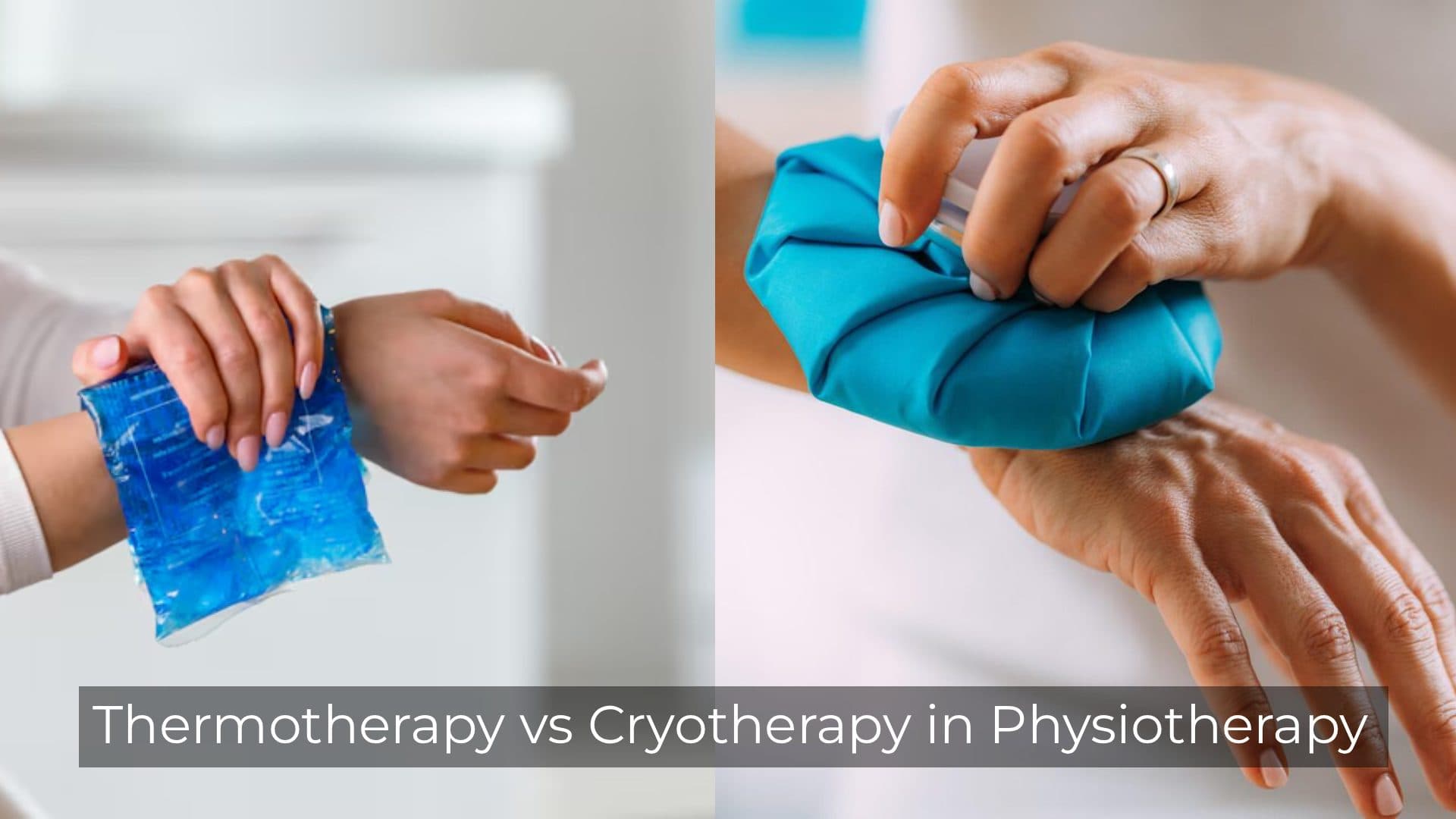
You pulled a muscle during your morning run. You’ve got a hot water bottle in one hand and an ice pack in the other, and absolutely no idea which one to reach for.
You’re not alone. This is one of the most common questions physiotherapists hear every single day. Should you apply heat or ice? Is cold better for swelling? Does heat make inflammation worse? The confusion is real, and using the wrong modality at the wrong time can actually slow your recovery.
In this guide, we break down thermotherapy vs cryotherapy in physiotherapy, what each treatment does, the science behind it, when to use which, and how a skilled physiotherapist helps you choose the right approach for your specific condition.
What Is Thermotherapy in Physiotherapy?
Thermotherapy is the therapeutic application of heat to the body with the goal of changing tissue temperature in a targeted area to promote healing and pain relief. In physiotherapy practice, this can range from simple hot packs to advanced deep-heating modalities.
How Does Heat Therapy Work?
When heat is applied to the body, it causes vasodilation, the widening of blood vessels. This increases blood flow to the affected area, delivering more oxygen, nutrients, and healing proteins while also helping to remove metabolic waste products. At the physiological level, thermotherapy:
- Increases tissue metabolism and cellular activity
- Improves connective tissue extensibility, making muscles and tendons more pliable
- Reduces muscle spasm and guarding
- Decreases pain through modulation of nerve signals
- Enhances joint range of motion by reducing stiffness
Types of Thermotherapy Used in Physiotherapy
Thermotherapy in a clinical setting comes in two forms, superficial heat and deep heat.
Superficial Heating Methods include hot packs, paraffin wax baths, hydrotherapy (warm water therapy), and infrared lamps. These are most effective for surface-level muscles and superficial tissues. They typically heat to a depth of about 1–2 cm.
Deep Heating Methods include therapeutic ultrasound and shortwave diathermy. These modalities penetrate deeper tissues, up to 3–5 cm, making them effective for conditions involving joint capsules, deeper muscles, and tendons.
When Is Thermotherapy Recommended?
Physiotherapists typically recommend heat therapy for:
- Chronic musculoskeletal conditions such as chronic low back pain, neck stiffness, and long-standing joint pain
- Muscle tension and spasm: heat is highly effective at relieving tight, knotted muscles
- Osteoarthritis: particularly during the sub-acute and chronic phases to improve joint flexibility
- Delayed Onset Muscle Soreness (DOMS) after exercise
- Pre-exercise warm-up: applying heat before stretching improves tissue extensibility
- Scar tissue management: heat softens fibrotic tissue, making physiotherapy exercises more effective
- Sciatica and lumbago: for chronic, non-inflamed presentations
If you’re recovering from surgery or managing a long-term orthopaedic condition, your physiotherapist may incorporate thermotherapy as part of a broader orthopaedic physiotherapy program.
What Is Cryotherapy in Physiotherapy?
Cryotherapy is the therapeutic use of cold temperatures to treat injuries and manage pain. The word comes from the Greek kryos (cold) and therapeia (healing). It has been used medicinally since ancient times, and modern physiotherapy has refined it into a highly targeted modality.
How Does Cold Therapy Work?
Cold application causes vasoconstriction, the narrowing of blood vessels, which reduces blood flow to the injured or inflamed area. This cascade of physiological effects includes:
- Reduction in tissue metabolism, which limits secondary tissue damage
- Decreased oxygen utilisation, reducing cellular hypoxia at the injury site
- Reduced nerve conduction velocity, which decreases pain signal transmission
- Decrease in oedema (swelling) by limiting fluid extravasation
- Reduction of muscle spasm through the pain-spasm-pain cycle interruption
- Lowering of local inflammation markers
Types of Cryotherapy Used in Physiotherapy
- Ice packs and crushed ice bags: the most common and accessible form
- Gel cold packs: reusable and mouldable to body contours
- Ice massage: direct skin application of ice for more targeted areas
- Cold water immersion: used frequently in sports physiotherapy and post-exercise recovery
- Cryo-compression devices: combine cold and compression for enhanced oedema control
- Freeze sprays (vapocoolant sprays): used for localised, immediate pain relief
- Whole body cryotherapy (WBC): involves exposure to extreme cold in a cryochamber for 2–3 minutes, increasingly used in elite sports recovery
When Is Cryotherapy Recommended?
Physiotherapists use cold therapy for:
- Acute soft tissue injuries: the gold standard recommendation is to apply cold within the first 72 hours of injury
- Post-surgical swelling and pain: cryotherapy reduces inflammation in the early post-operative period
- Acute muscle strains and ligament sprains
- Tendinopathies: particularly following exercise-loading sessions
- Acute flare-ups of chronic conditions like rheumatoid arthritis during active inflammation
- Sports injury management: rapid return to activity often begins with effective cryotherapy
- Headaches and migraines: cold application to the neck and head can provide relief
For athletes and active individuals, sports physiotherapy programmes at Physio at Your Doorstep frequently incorporate structured cryotherapy protocols as part of acute injury management and post-performance recovery plans.
Thermotherapy vs Cryotherapy: A Head-to-Head Comparison
| Factor | Thermotherapy (Heat) | Cryotherapy (Cold) |
|---|---|---|
| Primary Effect | Vasodilation: increases blood flow | Vasoconstriction: decreases blood flow |
| Tissue Metabolism | Increases | Decreases |
| Best Timing | Chronic/sub-acute phase | Acute phase (first 72 hours) |
| Inflammation | Increases: avoid in acute inflammation | Decreases: effective for acute swelling |
| Muscle Spasm | Relieves | Relieves |
| Pain Relief | Moderate to strong | Strong: numbing effect |
| Joint Stiffness | Very effective | Less effective |
| Application Time | 15–30 minutes | 10–20 minutes |
| Connective Tissue | Improves extensibility | Reduces flexibility temporarily |
| Ideal Conditions | Chronic pain, stiffness, muscle tightness | Acute injury, post-surgical swelling, tendinitis |
The Critical Rule: Acute vs Chronic: Timing Is Everything
The single most important principle when choosing between heat and cold therapy is understanding the phase of injury or condition.
The Acute Phase (0–72 Hours Post-Injury)
In the immediate aftermath of a muscle strain, sprain, or any soft tissue injury, the body initiates an inflammatory response. This is a protective mechanism: but it also causes pain, redness, heat, and swelling. During this phase:
- Use cryotherapy. Ice helps control the inflammatory cascade, reduces swelling, and provides rapid pain relief.
- Avoid thermotherapy. Heat will increase vasodilation and blood flow to an already inflamed area, worsening swelling and potentially prolonging the acute phase.
The classic acronym RICE (Rest, Ice, Compression, Elevation) applies here: and the “I” in RICE is cryotherapy.
The Sub-Acute Phase (3–7 Days Post-Injury)
As the acute inflammation begins to settle, the body moves into tissue repair mode. Swelling reduces, redness fades, and mobility gradually returns. This is when the transition from cold to heat can begin:
- Assess your symptoms. If significant swelling is still present, continue with ice.
- Begin introducing heat once swelling has substantially resolved and the main complaint shifts to stiffness and pain outside of the normal range of motion.
The Chronic Phase (Weeks to Months)
In the chronic phase, including long-standing conditions like osteoarthritis, chronic low back pain, or old sports injuries, thermotherapy is typically the preferred modality. Heat improves tissue extensibility, making physiotherapy exercises more effective and reducing the residual stiffness that characterises chronic conditions.
What Does the Research Say?
The clinical evidence base for both modalities continues to grow. A study published in the Journal of Clinical Medicine Research confirmed that moist heat is more effective than dry heat for delayed onset muscle soreness. Research on acute low back pain found that both thermotherapy and cryotherapy provided significantly greater pain reduction than analgesic medication alone: with thermotherapy showing superior results in pain reduction scores at follow-up assessments.
A comprehensive review published in the PMC examining cryotherapy and thermotherapy for osteoarthritis and rheumatoid arthritis concluded that cryotherapy is best suited for controlling inflammation during the acute phase, while thermotherapy is more effective for pain management and joint function restoration during the chronic phase.
For knee osteoarthritis specifically, a randomised controlled trial comparing both modalities found thermotherapy superior for reducing daily pain during physical activities, while cryotherapy showed better results for certain functional parameters: confirming that a personalised, phase-appropriate approach yields the best outcomes.
Contrast Therapy: When You Use Both
An increasingly used technique in physiotherapy is contrast therapy, alternating between heat and cold. Typically, the protocol involves:
- 3–4 minutes of heat application
- 1 minute of cold application
- Repeated for 3–5 cycles, ending with cold
Contrast therapy is thought to create a “vascular pumping” effect: the alternating vasodilation and vasoconstriction helps flush metabolic waste products from tissues and improve circulation. It is commonly used for:
- Chronic swelling in the sub-acute phase
- Post-exercise recovery
- Subacute soft tissue injuries
However, current evidence suggests contrast therapy does not offer significantly greater benefits than either modality alone for most acute conditions. Your physiotherapist will determine whether it is appropriate for your specific case.
Precautions and Contraindications
When NOT to Use Thermotherapy
- Over acute injuries with active inflammation or swelling
- Over areas of infection, open wounds, or skin conditions
- In patients with diabetes mellitus (reduced sensation increases burn risk)
- In patients with multiple sclerosis (heat can worsen neurological symptoms)
- Over areas with poor circulation
- Over joint prostheses (especially with deep heating: ultrasound can cause prosthetic damage)
- During pregnancy over the abdomen or lumbar region
Patients undergoing physiotherapy in pregnancy should receive particular guidance from their physiotherapist before any heat modality is applied.
When NOT to Use Cryotherapy
- In patients with Raynaud’s phenomenon or cold hypersensitivity
- Over areas of sensory impairment, the patient must be able to feel the cold to prevent frostbite
- In patients with cold urticaria (cold-induced allergic reaction)
- Over areas of poor peripheral circulation
- In patients with paroxysmal cold haemoglobinuria
- Never apply directly to skin, always use a barrier (cloth, towel) to prevent frostbite
Older adults and patients with neurological conditions require special care, as their temperature regulation and sensory awareness may be reduced. If you or a loved one requires specialised care, our geriatric physiotherapy or neurological physiotherapy services are delivered by experienced clinicians who carefully assess each patient before applying any thermal modality.
Can You Do This at Home? Tips for Safe Self-Application
While thermotherapy and cryotherapy are safe when used correctly, there are practical guidelines everyone should follow at home:
For home ice application:
- Always wrap ice packs in a damp towel or cloth, never apply ice directly to bare skin
- Apply for no more than 15–20 minutes at a time
- Wait at least 45–60 minutes between sessions
- Stop immediately if skin becomes intensely red, numb, or develops blisters
For home heat application:
- Use a covered hot water bottle or a moist heat pack
- Ensure the temperature is comfortable: not scalding
- Apply for 15–30 minutes at a time
- Never sleep with a heat pack applied, as prolonged exposure causes burns
For complex or chronic conditions, self-applied home therapy should always complement: not replace, hands-on professional physiotherapy. If you’re unsure which modality is right for your condition, our online physiotherapy consultation service allows you to receive expert guidance from the comfort of your home.
How Physio at Your Doorstep Integrates Thermal Therapies Into Your Treatment
At Physio at Your Doorstep, our qualified physiotherapists don’t simply hand you an ice pack and leave. Thermal modalities are always integrated into a structured, personalised physiotherapy programme that addresses the root cause of your condition, not just the symptoms.
Our approach includes:
- Comprehensive assessment: understanding your condition, phase of injury, medical history, and goals
- Modality selection: choosing the right thermal therapy based on evidence and clinical reasoning
- Hands-on physiotherapy: manual therapy, therapeutic exercise, and mobilisation techniques
- Patient education: teaching you how to safely continue thermal therapy at home between sessions
- Progress review: adjusting the treatment plan as you move through different healing phases
We offer specialised physiotherapy for a wide range of conditions, including post-surgical physiotherapy where thermal modalities play a critical role in managing post-operative pain and swelling. Our physiotherapists come to your home across Bangalore, including JP Nagar, BTM Layout, Jayanagar, Koramangala, HSR Layout, and Whitefield, making professional care truly accessible.
Key Takeaways
- Cryotherapy (cold) is the go-to for acute injuries, post-surgical swelling, and active inflammation, typically within the first 72 hours
- Thermotherapy (heat) is most effective for chronic pain, muscle stiffness, joint tightness, and the sub-acute and chronic phases of healing
- Both modalities reduce pain and muscle spasm, but through opposite physiological mechanisms
- Always apply cold/heat through a barrier to protect the skin
- Neither modality should replace a comprehensive physiotherapy treatment plan
- Patients with diabetes, circulatory problems, neurological conditions, or sensory impairments need to consult a physiotherapist before using either therapy
Resources
For further reading on the clinical evidence behind these modalities:
- Nadler SF, Weingand K, Kruse RJ. The Physiologic Basis and Clinical Applications of Cryotherapy and Thermotherapy for the Pain Practitioner. Pain Physician. 2004;7(3):395–399. PubMed
- Cryotherapy and thermotherapy in the management of osteoarthritis and rheumatoid arthritis, A comprehensive review. PMC. Read here
- The Efficacy of Thermotherapy and Cryotherapy on Pain Relief in Patients with Acute Low Back Pain. PMC. Read here
- Physiopedia: Thermotherapy
Reviewed and authored by the physiotherapy team at Physio at Your Doorstep, Bangalore. This content is for educational purposes and does not replace professional medical advice. Always consult a qualified physiotherapist before beginning any new treatment.
Frequently Asked Questions (FAQs)
Should I use heat or ice for back pain?
It depends on whether your back pain is acute or chronic. For a sudden back injury with swelling and inflammation (acute pain), apply ice for the first 48–72 hours. For chronic back pain, muscle tension, or stiffness without acute inflammation, heat is generally more effective. A physiotherapist can assess your specific presentation and recommend the right approach.
How long should I apply ice to an injury?
Apply ice for 10–20 minutes at a time, with at least a 45–60 minute break between applications. Never apply ice directly to the skin, always use a cloth or towel as a barrier. Applying ice for too long can cause frostbite or nerve damage.
Is heat or cold better for muscle pain?
For muscle soreness from exercise (DOMS), heat tends to be more effective as it improves blood flow and relaxes tight muscles. For an acute muscle strain or pull (which involves actual tissue damage and inflammation), ice is preferred in the first 72 hours.
Can I alternate between heat and ice?
Yes, this is called contrast therapy. It involves alternating between heat and cold applications in cycles. It can be beneficial during the sub-acute phase to promote circulation and reduce residual swelling. However, it is not recommended in the acute phase. Always consult your physiotherapist before starting contrast therapy
Is cryotherapy safe during pregnancy?
Local cryotherapy (ice packs) applied to safe areas like the upper back, neck, or limbs is generally considered safe during pregnancy. However, whole-body cryotherapy (cryochambers) is not recommended during pregnancy. Heat therapy applied over the abdomen or lower back should be avoided during pregnancy. Always consult your physiotherapist or doctor before using any thermal modality while pregnant. Our pregnancy physiotherapy service provides safe, supervised care tailored specifically for expectant mothers.
What is the difference between superficial and deep thermotherapy?
Superficial thermotherapy (hot packs, paraffin baths) heats tissues to a depth of about 1–2 cm and is effective for surface muscles and skin. Deep thermotherapy (therapeutic ultrasound, shortwave diathermy) penetrates 3–5 cm into the tissue, reaching deeper muscles, tendons, and joint structures. Deep heating modalities must be administered by a trained physiotherapist
Can heat make inflammation worse?
Yes. Applying heat to an acutely inflamed area increases vasodilation and blood flow, which can worsen swelling, redness, and pain. Heat should never be applied to a fresh injury or during an active inflammatory flare. Wait until swelling has substantially resolved before introducing thermotherapy.
How do physiotherapists decide which thermal therapy to use?
Physiotherapists conduct a thorough assessment including the nature of the injury, duration of symptoms, stage of healing, patient medical history, and treatment goals. They consider both the physiological effects of each modality and the specific clinical presentation before recommending thermotherapy, cryotherapy, or a combination approach. This is why professional guidance is far superior to self-treatment.
Can cryotherapy help with arthritis?
Yes, but the type of arthritis matters. For rheumatoid arthritis during an active flare, cryotherapy helps reduce inflammation and acute pain. For osteoarthritis in the chronic phase without active swelling, thermotherapy is typically more effective. In some patients, a combination approach may be used across different phases of their condition
Where can I get professional thermotherapy or cryotherapy in Bangalore?
Physio at Your Doorstep provides expert physiotherapy services, including thermal modalities, right in your home across Bangalore. Our physiotherapists bring the equipment and expertise to you, saving you the effort of travelling to a clinic. Book an appointment here or explore our full range of physiotherapy services.
Related Service
Orthopaedic Physiotherapy at Home
Book a certified physiotherapist for orthopaedic physiotherapy across Bangalore & Pune.
Related Articles

AI Technology in Physiotherapy: How Smart Rehabilitation Is Changing Recovery in 2026
AI has quietly moved from research labs into everyday rehabilitation. Here is what smart physiotherapy actually does today, what the research really shows, where the limits are, and what it means for your own recovery.
Read More
Actinotherapy vs Heliotherapy in Physiotherapy: Key Differences, Uses, and Which One Is Right for You
Actinotherapy and heliotherapy both use light to trigger healing, but they are not the same treatment. Here is how each works, a side-by-side comparison of their uses and contraindications, and how a physiotherapist decides which is right for you.
Read More
Types of Active and Passive Movement in Physio: A Complete Guide
Passive movement, active movement, and the shades in between form the backbone of almost every physiotherapy program. Here is every type of movement used in physio, the science behind each, and how a therapist decides which fits which stage of recovery.
Read MoreNeed Professional Help?
Our expert physiotherapists are here to help you recover and stay healthy.