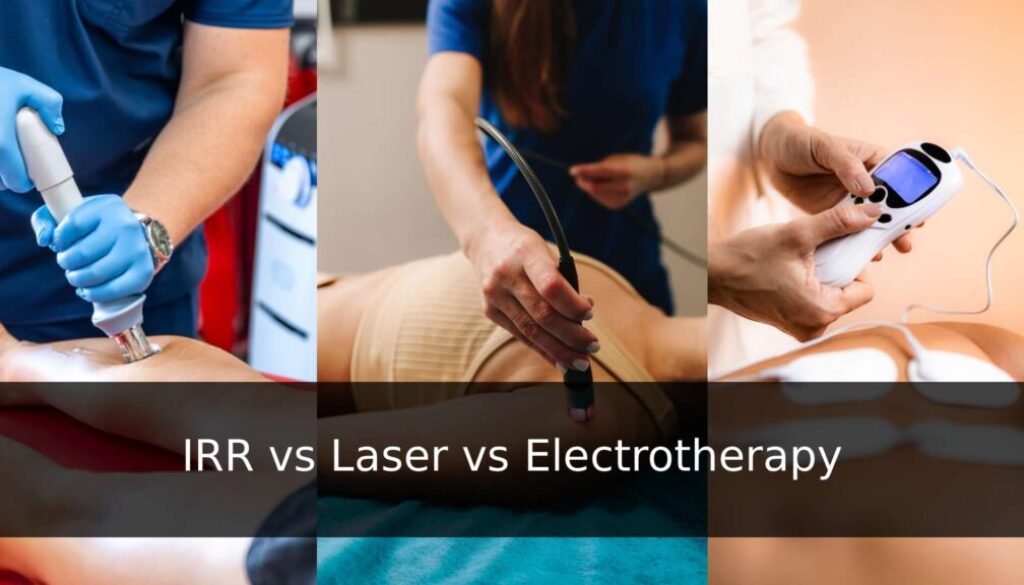
IRR vs Laser vs Electrotherapy Physiotherapy Treatment: The Complete Guide
When choosing between IRR vs Laser vs Electrotherapy physiotherapy treatment options, understanding the distinct mechanisms, benefits, and applications of each modality is crucial for optimal recovery. Modern physiotherapy offers these three powerful therapeutic interventions, each with unique characteristics that address different aspects of pain management, tissue healing, and functional restoration.
This comprehensive guide explores the scientific foundation, clinical applications, and comparative effectiveness of Infrared Radiation (IRR) therapy, Laser therapy, and Electrotherapy in physiotherapy practice. Whether you’re dealing with chronic pain, acute injuries, or seeking rehabilitation support, understanding these treatment modalities will help you make informed decisions about your healthcare journey.
Understanding Infrared Radiation (IRR) Therapy in Physiotherapy
What is IRR Therapy?
Infrared Radiation (IRR) therapy represents a sophisticated approach to pain management and tissue healing within the electromagnetic spectrum. Operating with wavelengths ranging from 760 nanometers to 1 millimeter, IRR therapy harnesses the power of infrared light to penetrate skin and underlying tissues, promoting natural healing processes without invasive procedures.
Types of Infrared Radiation Used in Physiotherapy
Near-Infrared (NIR) Radiation (0.78-3.0 μm)
- Penetrates deeper into tissues (2-7 centimeters)
- Reaches muscles, nerves, and bones effectively
- Provides luminous heat with visible light component
Far-Infrared (FIR) Radiation (50.0-1000.0 μm)
- Absorbed primarily by skin surface
- Generates gentle, non-luminous radiant heat
- Penetrates up to 4 centimeters beneath skin surface
Therapeutic Mechanisms of IRR Therapy
IRR therapy works through multiple physiological pathways:
Photobiomodulation Effects
- Stimulates mitochondrial activity in cells
- Increases ATP (adenosine triphosphate) production
- Enhances cellular metabolism and energy production
Vascular Response
- Triggers nitric oxide release in blood vessels
- Improves local blood circulation
- Enhances oxygen and nutrient delivery to tissues
Pain Modulation
- Activates endorphin release pathways
- Modulates pain signal transmission
- Reduces inflammatory mediators at cellular level
Clinical Applications of IRR Therapy
Musculoskeletal Conditions
- Chronic low back pain management
- Joint stiffness and arthritis symptoms
- Muscle tension and spasm relief
- Post-exercise recovery enhancement
Wound Healing Applications
- Accelerated tissue repair processes
- Reduced inflammation in healing tissues
- Enhanced collagen synthesis
- Improved circulation to wound sites
Pain Management Indications
- Acute and chronic pain conditions
- Post-operative pain relief
- Neuropathic pain syndromes
- Fibromyalgia symptom management
Laser Therapy in Physiotherapy: Science and Applications
Understanding Low-Level Laser Therapy (LLLT)
Low-Level Laser Therapy, also known as cold laser therapy or photobiomodulation (PBM), represents a paradigm shift in non-invasive treatment approaches. Unlike high-power surgical lasers that destroy tissue, LLLT uses specific wavelengths of light to stimulate cellular processes and promote healing without thermal damage.
Classification of Laser Systems
Class 3B Laser Systems
- Power range: 5-500 milliwatts
- Requires eye protection during treatment
- Suitable for superficial tissue treatments
Class 4 Laser Systems
- Power output exceeds 500 milliwatts
- Penetrates deeper tissue layers
- Requires comprehensive safety protocols
Photobiomodulation Mechanisms
Cellular Level Interactions
- Primary photoreceptor: Cytochrome c oxidase
- Increases mitochondrial respiration
- Enhances cellular energy production (ATP synthesis)
Tissue Level Effects
- Promotes angiogenesis (new blood vessel formation)
- Stimulates fibroblast proliferation
- Enhances collagen synthesis and tissue repair
Systemic Responses
- Modulates inflammatory response pathways
- Activates endogenous pain control mechanisms
- Improves lymphatic drainage and circulation
Clinical Evidence for Laser Therapy
Musculoskeletal Applications
- Significant pain reduction in osteoarthritis patients
- Improved functional outcomes in chronic low back pain
- Accelerated healing in soft tissue injuries
- Enhanced recovery in sports-related injuries
Wound Healing Benefits
- Faster epithelialization processes
- Reduced healing time for chronic wounds
- Improved tissue quality and strength
- Minimal risk of complications
Treatment Parameters and Protocols
Wavelength Considerations
- Red light (630-700 nm): Superficial tissue treatment
- Near-infrared (780-1000 nm): Deep tissue penetration
- Combination protocols: Comprehensive tissue targeting
Dosage Calculations
- Energy density: 1-10 J/cm² for most conditions
- Power density: 10-500 mW/cm² depending on application
- Treatment duration: 30 seconds to 20 minutes per session
Electrotherapy: Diverse Modalities for Comprehensive Treatment
Overview of Electrotherapy in Modern Physiotherapy
Electrotherapy encompasses a broad spectrum of therapeutic interventions that utilize electrical energy to stimulate nerves, muscles, and tissues. This versatile approach offers targeted treatment options for pain management, muscle rehabilitation, and functional restoration across various clinical conditions.
Transcutaneous Electrical Nerve Stimulation (TENS)
Mechanism of Action
- Gate control theory implementation
- Selective stimulation of large-diameter sensory fibers
- Inhibition of pain signal transmission to spinal cord
- Activation of descending inhibitory pathways
Clinical Applications
- Acute and chronic pain management
- Post-operative pain control
- Arthritis symptom relief
- Neuropathic pain conditions
Treatment Parameters
- Frequency range: 1-200 Hz
- Pulse width: 50-500 microseconds
- Intensity: Sensory to motor threshold levels
- Session duration: 20-60 minutes
Neuromuscular Electrical Stimulation (NMES)
Therapeutic Objectives
- Muscle strengthening and conditioning
- Prevention of muscle atrophy
- Facilitation of motor relearning
- Enhancement of muscle endurance
Physiological Mechanisms
- Direct motor nerve stimulation
- Recruitment of type I and type II muscle fibers
- Improvement in muscle protein synthesis
- Enhanced neuromuscular coordination
Clinical Indications
- Post-surgical muscle weakness
- Neurological conditions with motor impairment
- Sports performance enhancement
- Elderly population muscle maintenance
Interferential Current Therapy (IFT)
Technical Principles
- Two medium-frequency alternating currents (4000 Hz)
- Beat frequency generation (1-200 Hz)
- Deep tissue penetration capability
- Comfortable patient tolerance
Therapeutic Effects
- Pain reduction through endorphin release
- Improved circulation and lymphatic drainage
- Reduced muscle spasm and tension
- Enhanced tissue healing processes
Clinical Applications
- Deep tissue pain management
- Edema reduction protocols
- Muscle spasm treatment
- Chronic inflammatory conditions
Ultrasound Therapy
Physical Principles
- High-frequency sound waves (1-3 MHz)
- Mechanical and thermal effects on tissues
- Deep penetration (up to 5 cm)
- Precise tissue targeting capability
Therapeutic Mechanisms
- Acoustic streaming and microstreaming
- Tissue temperature elevation
- Enhanced cellular permeability
- Acceleration of enzymatic reactions
Clinical Benefits
- Soft tissue injury rehabilitation
- Scar tissue breakdown
- Joint mobility improvement
- Chronic pain reduction
IRR vs Laser vs Electrotherapy: Comprehensive Treatment Comparison
Mechanism of Action Comparison
|
Treatment Modality |
Primary Mechanism |
Tissue Penetration |
Energy Type |
|
IRR Therapy |
Photobiomodulation + Thermal |
2-7 cm |
Infrared radiation |
|
Laser Therapy |
Photobiomodulation |
Variable (1-4 cm) |
Coherent light |
|
Electrotherapy |
Electrical stimulation |
Variable |
Electrical current |
Treatment Depth and Penetration
IRR Therapy Penetration
- Near-infrared: Deep tissue reach (up to 7 cm)
- Far-infrared: Superficial to moderate depth (4 cm)
- Optimal for muscle and joint conditions
Laser Therapy Penetration
- Class 3B: Limited depth (1-2 cm)
- Class 4: Enhanced penetration (3-4 cm)
- Wavelength-dependent tissue interaction
Electrotherapy Penetration
- TENS: Superficial nerve stimulation
- NMES: Motor nerve activation
- IFT: Deep tissue penetration (5+ cm)
- Ultrasound: Deepest penetration potential
Pain Management Effectiveness
Acute Pain Conditions
- IRR: Moderate effectiveness, rapid onset
- Laser: High effectiveness, sustained relief
- Electrotherapy: High effectiveness, immediate relief
Chronic Pain Management
- IRR: Good long-term benefits
- Laser: Excellent cumulative effects
- Electrotherapy: Variable depending on modality
Tissue Healing Capabilities
Wound Healing Promotion
- Laser Therapy: Superior evidence for wound healing
- IRR Therapy: Good thermal and photobiomodulation effects
- Electrotherapy: Limited direct healing effects
Inflammation Reduction
- IRR Therapy: Excellent anti-inflammatory properties
- Laser Therapy: Strong anti-inflammatory evidence
- Electrotherapy: Moderate through improved circulation
Treatment Duration and Session Requirements
IRR Therapy Sessions
- Duration: 10-30 minutes per session
- Frequency: 3-5 sessions per week
- Course: 2-6 weeks depending on condition
Laser Therapy Sessions
- Duration: 5-20 minutes per session
- Frequency: 2-3 sessions per week
- Course: 6-12 sessions for optimal results
Electrotherapy Sessions
- Duration: 15-60 minutes per session
- Frequency: Daily to 3 times per week
- Course: Variable based on specific modality
Side Effects and Contraindications
IRR Therapy Considerations
- Generally safe with minimal side effects
- Contraindicated over malignant tissues
- Caution with photosensitive medications
Laser Therapy Precautions
- Eye protection mandatory
- Contraindicated during pregnancy (precautionary)
- Avoid over growth plates in children
Electrotherapy Limitations
- Contraindicated with pacemakers
- Avoid over carotid sinus area
- Not suitable for patients with metal implants (specific modalities)
Cost-Effectiveness Analysis
Treatment Costs per Session
- IRR therapy: Low operational costs
- Laser therapy: Moderate costs
- Electrotherapy: Very low operational costs
Choosing the Right Treatment Modality
Patient Assessment Factors
Condition Severity Assessment
- Acute vs chronic presentation
- Tissue type primarily affected
- Depth of tissue involvement
- Previous treatment responses
Patient-Specific Considerations
- Age and overall health status
- Medication interactions
- Treatment accessibility
- Personal preferences and comfort
Evidence-Based Decision Making
Research Quality Hierarchy
- Systematic reviews and meta-analyses
- Randomized controlled trials
- Clinical case series
- Expert consensus guidelines
Treatment Selection Criteria
- Strongest evidence base for specific condition
- Patient safety profile
- Practical treatment considerations
- Cost-effectiveness ratios
Combination Therapy Approaches
IRR + Manual Therapy
- Enhanced tissue preparation
- Improved treatment tolerance
- Synergistic healing effects
Laser + Exercise Therapy
- Accelerated tissue recovery
- Improved functional outcomes
- Long-term maintenance benefits
Electrotherapy + Rehabilitation
- Motor relearning facilitation
- Strength improvement
- Functional restoration
Clinical Applications by Condition
Musculoskeletal Disorders
Osteoarthritis Management
- IRR Therapy: Excellent for joint stiffness and pain
- Laser Therapy: Strong evidence for pain reduction
- Electrotherapy: TENS effective for pain control
Sports Injuries
- Laser Therapy: Preferred for acute soft tissue injuries
- IRR Therapy: Good for muscle recovery
- Electrotherapy: NMES for strength maintenance
Chronic Back Pain
- IRR Therapy: Significant evidence for chronic low back pain
- Laser Therapy: Moderate improvements in function
- IFT: Deep tissue pain management
Neurological Conditions
Stroke Recovery
- Electrotherapy: NMES for motor recovery
- Laser Therapy: Limited evidence
- IRR Therapy: Adjunctive pain management
Peripheral Neuropathy
- Laser Therapy: Promising results for diabetic neuropathy
- TENS: Established pain management tool
- IRR Therapy: Improving circulation benefits
Post-Surgical Rehabilitation
Orthopedic Procedures
- Laser Therapy: Accelerated wound healing
- IRR Therapy: Pain and inflammation reduction
- Electrotherapy: Muscle strengthening protocols
Future Directions in Therapeutic Modalities
Technological Advancements
Multi-Modal Devices
- Combined IRR and laser systems
- Integrated electrotherapy platforms
- Smart treatment protocols
Precision Medicine Applications
- Personalized treatment parameters
- Biomarker-guided therapy selection
- Outcome prediction models
Research Priorities
Comparative Effectiveness Studies
- Head-to-head treatment comparisons
- Long-term outcome evaluations
- Cost-benefit analyses
Mechanism Understanding
- Cellular pathway elucidation
- Optimal dosing parameters
- Combination therapy synergies
Conclusion: Making Informed Treatment Decisions
Understanding the differences between IRR vs Laser vs Electrotherapy physiotherapy treatment empowers patients and healthcare providers to make evidence-based decisions for optimal therapeutic outcomes. Each modality offers distinct advantages:
IRR Therapy excels in chronic pain management, particularly for musculoskeletal conditions, offering deep tissue penetration with excellent safety profiles and cost-effectiveness.
Laser Therapy provides superior wound healing capabilities and tissue repair stimulation, with strong evidence for various acute and chronic conditions requiring cellular regeneration.
Electrotherapy offers versatile treatment options from immediate pain relief to muscle strengthening, with various modalities addressing specific rehabilitation needs.
The future of physiotherapy lies in personalized treatment approaches that combine these modalities based on individual patient needs, condition characteristics, and evidence-based protocols. Working with qualified physiotherapists ensures safe, effective treatment selection and optimal recovery outcomes.
For residents in Bangalore seeking professional physiotherapy services, home-based physiotherapy offers convenient access to these advanced treatment modalities with personalized care in familiar environments. Whether dealing with orthopaedic conditions or requiring post-surgical rehabilitation, professional guidance ensures optimal treatment outcomes.
Resource Links and Further Reading
Professional Organizations:
- World Confederation for Physical Therapy (WCPT)
- American Physical Therapy Association (APTA)
- Chartered Society of Physiotherapy (CSP)
Research Databases:
- PubMed/MEDLINE for latest research
- Cochrane Library for systematic reviews
- Physiopedia for evidence-based practice guidelines
Clinical Guidelines:
- National Institute for Health and Care Excellence (NICE)
- American College of Physicians guidelines
- International Association for the Study of Pain (IASP)
Equipment Manufacturers:
- Leading IRR therapy systems and specifications
- Laser therapy device comparisons and safety standards
- Electrotherapy equipment guidelines and protocols
This article provides educational information about physiotherapy treatment options. Always consult with qualified healthcare professionals for personalized treatment recommendations and medical advice.