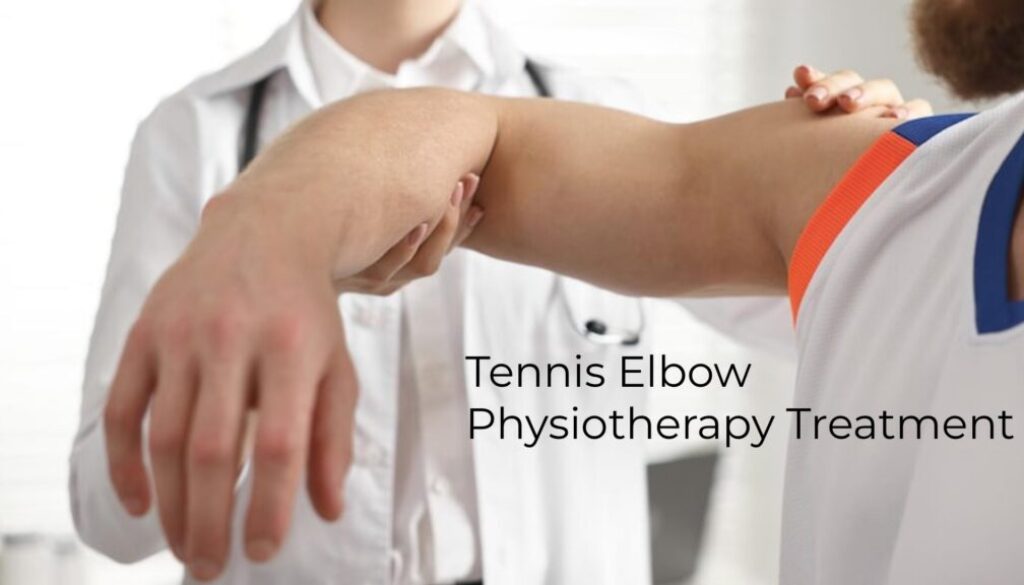
Tennis Elbow Physiotherapy Treatment: A Complete Evidence-Based Guide
Introduction
If you have been feeling a nagging, burning pain on the outside of your elbow that worsens when you grip a racquet, shake hands, or even lift your coffee cup, you are likely dealing with tennis elbow. Medically termed lateral epicondylitis or lateral elbow tendinopathy, this condition is one of the most common musculoskeletal complaints seen in clinical practice. Research estimates that it affects approximately 1 to 3% of the adult population each year and is responsible for significant disability in both working professionals and recreational athletes.
Despite its sporting name, only about 5% of tennis elbow cases are actually caused by playing tennis. The condition is just as likely to affect IT professionals, plumbers, carpenters, painters, and even homemakers who perform repetitive forearm movements. The good news is that physiotherapy treatment for tennis elbow is highly effective and, in most cases, surgery can be completely avoided.
This guide walks you through everything you need to know about tennis elbow physiotherapy treatment — from understanding the root cause and diagnosis to the latest evidence-based treatment techniques. If you are based in Bangalore and are looking for expert physiotherapy care from the comfort of your home, Physio at Your Doorstep provides specialised Sports Physiotherapy and Orthopaedic Physiotherapy services delivered directly to your home.
What Is Tennis Elbow? Understanding the Condition
Tennis elbow develops due to degeneration of the common extensor tendon at the lateral epicondyle of the humerus (the bony prominence on the outer side of the elbow). The tendon most commonly affected is the Extensor Carpi Radialis Brevis (ECRB), which is responsible for stabilising the wrist during gripping activities.
Contrary to what the word ‘epicondylitis’ implies, modern research shows that the pathology is not primarily inflammatory. Histopathological studies have consistently identified angiofibroblastic degeneration, meaning disorganised collagen fibres and the formation of immature blood vessels rather than classical inflammatory cells. This understanding has significantly changed how physiotherapists approach treatment.
Common Causes and Risk Factors
Tennis elbow is primarily an overuse injury. Activities that repeatedly load the forearm extensors can gradually damage the tendon over time. Some of the most frequently identified causes include:
- Repetitive wrist extension: Gripping, typing, using tools, or swinging a racquet
- Poor technique or equipment: Incorrect backhand in tennis, heavy or poorly gripped racquets
- Occupational demands: Plumbing, painting, carpentry, cooking, and keyboard-heavy work
- Age: Most common in people between 35 and 55 years
- Sudden increase in activity: Taking up a new sport or intensifying training without adequate preparation
Symptoms to Watch For
The hallmark symptom is pain and tenderness over the lateral epicondyle. This pain typically:
- Worsens with gripping activities such as opening a jar or shaking hands
- Radiates from the elbow down the forearm
- Feels worse in the morning or after a period of rest followed by activity
- Reduces grip strength, making everyday tasks difficult
Clinical insight: Pain reproduced during resisted wrist extension or resisted middle finger extension with the elbow straight is a reliable clinical indicator of tennis elbow.
How Is Tennis Elbow Diagnosed?
Tennis elbow is primarily a clinical diagnosis, meaning your physiotherapist can identify it through a structured physical examination without the immediate need for imaging in most cases. Common tests used include:
- Cozen’s test: Pain on resisted wrist extension with the elbow extended
- Mill’s test: Pain on passive wrist flexion with the elbow extended
- Maudsley’s test: Pain on resisted extension of the middle finger
- Grip strength testing: Reduced and painful grip on the affected side
Imaging such as ultrasound or MRI may be requested in cases where the diagnosis is uncertain or symptoms persist beyond several months, as these can reveal tendon thickening, calcification, or partial tears.
Tennis Elbow Physiotherapy Treatment: Evidence-Based Approaches
The consensus across multiple systematic reviews and randomised controlled trials is clear: physiotherapy is the most effective and sustainable first-line treatment for lateral elbow tendinopathy. It addresses the underlying tendon pathology, reduces pain, restores strength, and importantly, prevents recurrence.
A comprehensive physiotherapy programme for tennis elbow is multimodal — it combines several techniques selected based on the severity of your condition, its duration (acute vs chronic), and your specific functional demands.
1. Load Management and Activity Modification
The very first step in any tennis elbow rehabilitation programme is identifying and reducing the aggravating activity load. This does not mean complete rest — in fact, prolonged rest can delay healing and weaken the tendon further. Instead, your physiotherapist will help you:
- Modify the way you perform aggravating tasks
- Temporarily reduce the volume or intensity of loading on the tendon
- Introduce controlled progressive loading to stimulate tendon adaptation
An important distinction: unlike muscles, tendons have a limited blood supply, which makes them slower to heal. Structured loading is essential to guide this process effectively.
2. Therapeutic Exercise: The Cornerstone of Recovery
Exercise rehabilitation is widely regarded as the most effective long-term treatment for tennis elbow. Research supports a progressive loading protocol that moves through the following stages:
Isometric Exercises (Acute Phase)
Isometric holds involve contracting the forearm extensor muscles without any joint movement. This approach has been shown to provide immediate pain relief and is ideal in the early stages when pain is limiting all other movement.
- Wrist extension isometric hold against a wall or table
- Grip squeezing exercises with minimal movement
- Hold each contraction for 30 to 45 seconds, performed 4 to 5 times per session
Eccentric Exercises (Subacute and Chronic Phase)
Eccentric training involves slowly lowering a weight while the muscle is lengthening under load. Multiple clinical trials and systematic reviews have demonstrated that eccentric exercises are highly effective for tendinopathy rehabilitation, as they promote collagen remodelling and tissue strengthening.
- Wrist extension with a light weight or resistance band, lowering slowly over 3 to 4 seconds
- Begin with the elbow slightly flexed, progressing to full extension as strength improves
- Fingers may start in flexion and gradually progress to extension for greater challenge
Progressive Resistance Exercises
As pain subsides and strength improves, resistance is progressively increased using free weights, resistance bands, or gym equipment. This stage bridges the gap between rehabilitation and return to activity.
3. Manual Therapy
Manual therapy techniques performed by a trained physiotherapist can significantly reduce pain and restore function, particularly in the early to mid stages of recovery. Evidence supports the following approaches:
Mulligan’s Mobilisation with Movement (MWM)
This is one of the most researched and recommended manual therapy techniques for tennis elbow. The physiotherapist applies a lateral glide to the elbow joint while the patient actively performs a pain-provoking grip task. Studies consistently show immediate improvements in pain-free grip strength following MWM.
Cyriax Physiotherapy (Deep Transverse Friction Massage)
Named after the pioneering orthopaedic physician James Cyriax, this technique involves applying deep, focused friction to the teno-osseous junction at the lateral epicondyle. The proposed mechanism includes softening of scar tissue, stimulating tissue remodelling, and modulating pain through the gate control mechanism. It is typically combined with supervised exercise for better outcomes.
Soft Tissue Massage and Myofascial Release
Massage targeting the forearm extensor muscles can reduce muscle tightness, improve local circulation, and decrease pain sensitivity. Myofascial release to the forearm and surrounding structures addresses broader soft tissue restrictions that may be contributing to the condition.
Joint Mobilisation
Maitland accessory mobilisation of the elbow and Maitland or Mulligan techniques addressing the cervical spine may be incorporated, particularly when there is evidence of cervical contribution or restricted elbow mechanics.
4. Electrotherapy Modalities
Several electrotherapy modalities have demonstrated evidence of benefit in tennis elbow management:
- Therapeutic Ultrasound: Promotes tissue healing through thermal and non-thermal effects; shown to reduce pain and improve function
- Low-Level Laser Therapy (LLLT): A systematic review of multiple randomised trials found LLLT to be effective at reducing pain and disability in lateral elbow tendinopathy
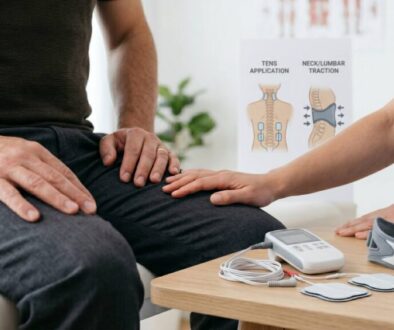
- TENS (Transcutaneous Electrical Nerve Stimulation): Provides symptomatic pain relief, particularly useful for acute flare-ups
- Extracorporeal Shockwave Therapy (ESWT): Particularly recommended for chronic tennis elbow that has not responded to conservative management; stimulates tissue repair and neovascularisation
- Pulsed Electromagnetic Field Therapy (PEMF): Evidence suggests benefit in reducing pain and improving function in lateral epicondylitis
5. Taping and Bracing
External support is a commonly used adjunct to physiotherapy, particularly for symptom management during activity:
- Kinesio Taping: A randomised controlled trial found that kinesio taping significantly reduced elbow pain during resisted wrist extension compared to sham taping; it is thought to reduce muscle load and improve proprioception
- Counterforce Brace (Tennis Elbow Strap): Worn just below the elbow, it disperses forces away from the lateral epicondyle; useful as an adjunct, particularly during return to aggravating activities
6. Cervical and Neural Mobilisation
An often-overlooked aspect of lateral elbow pain management is the potential contribution of the cervical spine and neural tension. Research demonstrates that initial cervical spine manipulation can produce immediate improvements in pain and function in patients with tennis elbow. Neural mobilisation techniques targeting the radial nerve may also be incorporated when nerve involvement is suspected.
Tennis Elbow Exercises You Can Do at Home
While supervised physiotherapy is essential for optimal recovery, your physiotherapist will also guide you through a home exercise programme to support your progress between sessions. Common exercises include:
- Wrist Extensor Stretch: Extend your arm, palm facing down. Use your other hand to gently pull the hand downward until you feel a stretch along the top of your forearm. Hold for 30 seconds, 3 repetitions.
- Wrist Flexor Stretch: Extend your arm, palm facing up. Gently press the hand downward with the other hand. Hold for 30 seconds, 3 repetitions.
- Forearm Eccentric Exercise: Rest your forearm on a table with your wrist over the edge, holding a light weight. Use your unaffected hand to lift the weight into extension, then slowly lower it over 3 to 4 seconds. 3 sets of 10 to 15 repetitions.
- Grip Strengthening: Squeeze a soft ball or putty for 5 seconds, release, and repeat. 3 sets of 10 repetitions.
- Forearm Pronation/Supination: Hold a hammer handle with the elbow at 90 degrees. Slowly rotate the forearm palm up then palm down. 3 sets of 10 repetitions.
Important: All exercises should be performed within a comfortable range of pain. If an exercise causes a significant increase in pain during or after the session, reduce the load or consult your physiotherapist before continuing.
How Long Does Tennis Elbow Take to Heal with Physiotherapy?
Recovery timelines vary based on the duration and severity of the condition, individual health factors, and consistency with the rehabilitation programme. As a general guide:
- Acute cases (less than 6 weeks): Significant improvement expected within 6 to 8 weeks of physiotherapy
- Subacute cases (6 to 12 weeks): Full recovery typically takes 3 to 6 months
- Chronic cases (more than 3 months): May require 6 to 12 months; adjunctive treatments like ESWT or PRP may be considered
It is worth noting that natural resolution without treatment can occur in many patients, though it may take 12 to 18 months. Physiotherapy accelerates this process and significantly reduces the risk of recurrence by addressing the underlying biomechanical causes.
When Should You See a Physiotherapist for Tennis Elbow?
You should seek physiotherapy assessment and treatment if:
- Elbow pain has been present for more than 2 weeks
- Pain is affecting your ability to work, sleep, or perform daily activities
- You have previously had tennis elbow that recurred
- You are a sportsperson looking to return to competition safely
- Pain has not improved with self-management (ice, rest, over-the-counter pain relief)
If you are in Bangalore and would prefer expert physiotherapy care without the inconvenience of clinic visits, our team at Physio at Your Doorstep offers Orthopaedic Physiotherapy and Sports Physiotherapy at your home, with same-day appointments available. We serve areas including JP Nagar, BTM Layout, Koramangala, HSR Layout, Jayanagar, Whitefield, and more across Bangalore.
Preventing Tennis Elbow Recurrence
One of the most important but frequently missed aspects of tennis elbow management is relapse prevention. Once your pain has resolved, your physiotherapist will guide you through:
- Ongoing strengthening: Maintaining forearm and wrist extensor strength reduces tendon vulnerability
- Warm-up and cool-down routines: Gradual loading before activity and stretching afterwards
- Equipment modifications: Correct grip size, racquet weight, and vibration dampening for racquet sports
- Ergonomic assessment: Workstation setup and tool grip adjustments for occupational contributors
- Load monitoring: Avoiding sudden spikes in training volume or intensity
Why Choose Physio at Your Doorstep for Tennis Elbow Treatment in Bangalore?
At Physio at Your Doorstep, we bring certified, experienced physiotherapists to your home, clinic, or workplace across Bangalore. Founded by Dr. Atharva Mishra, our team is trained in the latest evidence-based techniques for musculoskeletal conditions including tennis elbow.
Our tennis elbow physiotherapy programme is personalised to your needs and may include manual therapy, structured exercise rehabilitation, electrotherapy, taping, and home exercise guidance — all delivered in the comfort of your home.
Ready to start your recovery? Book an appointment today or speak with us directly on +91 82337 87737. You can also explore our Online Physiotherapy Consultation option if you prefer to start with a remote assessment.
Resources and Further Reading
The following peer-reviewed sources and clinical references were used in preparing this article:
- Pathan et al. (2023). A Review of Physiotherapy Techniques Used in the Treatment of Tennis Elbow. Cureus Journal of Medical Science.
- Physio-pedia. Tennis Elbow Management.
- Stasinopoulos et al. (2016). Lateral Elbow Tendinopathy: Evidence of Physiotherapy Management. World Journal of Orthopedics.
- Johnson et al. (2019). Tennis Elbow: A Clinical Review Article. Journal of Clinical Orthopaedics and Trauma.
If you are dealing with persistent elbow pain and would like an expert assessment, our physiotherapists at Physio at Your Doorstep are available 24/7 across Bangalore. Book your appointment now and take the first step towards a pain-free recovery.
Frequently Asked Questions (FAQ)
Below are answers to the most commonly searched questions about tennis elbow physiotherapy treatment: