
Torticollis Physiotherapy Treatment: Causes, Techniques & Recovery
Waking up with your neck twisted to one side, or watching your newborn hold their head at an awkward angle, can be alarming. These are the defining experiences of torticollis, a condition that affects people across all age groups. The good news is that torticollis physiotherapy treatment is highly effective and, in most cases, can fully restore normal head and neck positioning without surgery.
This guide covers everything you need to know about torticollis, from its root causes to the specific physiotherapy techniques that have the strongest research backing. Whether you are a parent of an infant recently diagnosed with congenital muscular torticollis (CMT) or an adult dealing with recurrent neck muscle spasms, you will find clear, actionable information here.
What Is Torticollis? Understanding the Condition
The word torticollis comes from the Latin terms tortus (twisted) and collum (neck). It is a neuromuscular condition in which the head is held in a tilted, rotated, or asymmetrical position due to abnormal muscle activity or structural changes in the cervical spine and surrounding soft tissues.
In its most classic presentation, one side of the neck tilts toward the affected sternocleidomastoid (SCM) muscle, while the chin rotates away from that side. The SCM is the large muscle running from behind the ear down to the collarbone, and when it shortens or contracts abnormally, it produces this characteristic twisted posture.
Torticollis is not a single disease. It is an umbrella term for several distinct presentations, each with different underlying causes and slightly different physiotherapy approaches.
Types of Torticollis: Which One Do You Have?
Understanding the type of torticollis is the first step toward the right treatment plan.
Congenital Muscular Torticollis (CMT) is the most common form. It is classified as the third most common musculoskeletal condition in infancy, with reported incidence ranging from 0.2% to 2% of newborns. CMT arises from unilateral shortening or fibrosis of the SCM muscle, often caused by the fetal position in the womb, intrauterine vascular compression, or obstetric trauma during delivery. Infants present with lateral flexion toward the affected side and contralateral head rotation. In some cases, a small palpable mass (fibrotic nodule) may be felt in the neck muscle.
Acquired or Acute Torticollis in adults (commonly called wry neck) typically develops suddenly, often after sleeping in an awkward position, a minor neck injury, or prolonged posture strain. It involves muscle spasm and protective guarding, and most cases resolve within days to weeks with appropriate treatment.
Spasmodic Torticollis (Cervical Dystonia) is a neurological form in which the neck muscles contract involuntarily and persistently due to dysfunction in the basal ganglia. This is a chronic condition and the most complex to manage, often requiring a combination of physiotherapy, botulinum toxin injections, and sometimes neurological intervention.
Ocular Torticollis occurs when a visual imbalance causes compensatory head tilting. Treatment in this case is directed at the underlying eye problem, but physiotherapy addresses the secondary neck muscle changes.
Post-Traumatic Torticollis can follow whiplash injuries, cervical spine fractures, or severe soft tissue damage. Physiotherapy is central to restoring function after the acute phase has been managed medically.
Causes and Risk Factors
The causes of torticollis differ substantially between infants and adults.
In newborns and infants, the primary causes include abnormal fetal positioning (particularly in breech or transverse presentations), difficult deliveries requiring forceps or vacuum assistance, and prenatal ischemia affecting the SCM muscle. Research published in BMC Musculoskeletal Disorders involving over 2,500 cases confirms that intrauterine positional factors are the leading contributing cause in congenital cases.
In adults, torticollis can be triggered by a range of factors. Poor posture, especially from prolonged screen use or desk work that places chronic strain on the cervical muscles, is increasingly recognized as a significant contributor. Neck injuries from falls, road accidents, or sports trauma can cause muscle damage that leads to protective spasm and asymmetrical positioning. Medications, particularly antipsychotics and certain anti-nausea drugs, can cause acute dystonic reactions that mimic torticollis. Arthritis and degenerative disc disease in the cervical spine can also produce the condition in older adults.
Recognizing the Symptoms
The symptoms of torticollis vary depending on the underlying cause and severity, but there are common signs to watch for.
In infants, parents may notice persistent head tilting to one side, difficulty turning the head in the opposite direction, preference for feeding from one breast (due to discomfort on the affected side), a firm lump in the neck muscle, and asymmetrical facial development (plagiocephaly) if the condition is left untreated. These signs are usually apparent within the first 2 to 3 months of life.
In adults, acute torticollis often presents as sudden onset of neck pain on waking, significant stiffness, and an inability to rotate or tilt the head freely. Cervical dystonia, on the other hand, involves involuntary muscle contractions, jerking or tremor-like movements, and progressive worsening of head posture over time. Chronic neck pain, headaches, and shoulder tension frequently accompany adult torticollis.
Why Physiotherapy Is the First-Line Treatment for Torticollis
Physiotherapy is recommended as the primary treatment for both congenital and acquired torticollis, and the evidence for its effectiveness is compelling.
A 2024 systematic review published in the journal Children, examining randomized controlled trials from 2018 to 2023, found that soft tissue mobilization, passive stretching, and manual therapy of the cervical spine consistently produced measurable improvements in cervical range of motion (ROM) and muscle function in infants with CMT. Similarly, the American Physical Therapy Association Academy of Pediatric Physical Therapy published an updated Evidence-Based Clinical Practice Guideline in 2024, which sets the global standard for the physical therapy management of congenital muscular torticollis.
For adults, research consistently supports physiotherapy as effective for reducing pain, restoring neck mobility, and correcting postural alignment in both acute and chronic forms of the condition.
The advantages of physiotherapy over other approaches include its non-invasive nature, its capacity to address the root muscle dysfunction rather than just symptoms, and the lasting functional improvements it produces when carried out consistently.
Torticollis Physiotherapy Treatment: Core Techniques
An experienced physiotherapist will tailor the treatment plan based on the patient’s age, the type and severity of torticollis, and the clinical findings from assessment. That said, the following techniques form the backbone of evidence-based torticollis physiotherapy treatment.
1. Passive Stretching
Passive stretching is the cornerstone of CMT treatment in infants. The physiotherapist gently moves the infant’s head to stretch the shortened SCM muscle, aiming to restore full and symmetrical cervical rotation and lateral flexion. Sessions are designed to be gentle and controlled, with the therapist applying a slow, sustained stretch rather than a forceful one.
Research confirms that passive stretching consistently improves cervical range of motion in infants with CMT. The 2024 APTA guidelines recommend early initiation of stretching, ideally before 3 months of age, as outcomes are significantly better when treatment begins early.
For adults, passive stretching is combined with active participation, where the patient is guided to gradually increase their own range of motion as muscle tension releases.
2. Soft Tissue Mobilization and Massage
Soft tissue mobilization targets the SCM muscle and surrounding muscles (including the trapezius, scalenes, and splenius) to reduce fibrosis, improve tissue extensibility, and decrease muscle tone. Studies consistently report benefits from these techniques in both infant and adult torticollis.
Myofascial release, trigger point therapy, and longitudinal muscle strokes are commonly used. In infants, this involves gentle pressure along the length of the affected muscle. In adults, deeper work may be incorporated depending on tolerance and chronicity.
3. Manual Therapy of the Cervical Spine
Manual therapy addresses joint mobility restrictions in the cervical spine, particularly at the upper cervical segments (occiput, atlas, and axis). In infants, manual treatment of these levels has been shown to enhance ROM by improving the mechanical relationship between the skull base and the upper vertebrae.
In adults, cervical joint mobilization and manipulation (when clinically appropriate) can provide rapid relief of acute neck stiffness and restore normal movement patterns. A 2024 systematic review and meta-analysis confirmed significant benefits of non-surgical, non-pharmacological treatments, including manual therapy, for congenital torticollis.
4. Therapeutic Exercises
Therapeutic exercise is central to both the treatment and the long-term maintenance of improvement.
For adults with torticollis, physiotherapists prescribe a progressive program that typically includes:
Cervical lateral flexion stretch: Sitting upright, gently tilt the ear toward the opposite shoulder until a mild stretch is felt in the neck. Hold for 20 to 30 seconds and repeat 5 to 10 times, several times daily. This targets the shortened SCM and scalene muscles.
Head rotation exercise: From an upright seated position with the head as level as possible, slowly rotate the head away from the affected side. Hold for 2 to 3 seconds, then return. Repeat 10 times in both directions. This promotes symmetrical range of motion and helps normalize movement patterns.
Chin tucks (cervical retraction): Sitting upright, gently pull the chin straight back, creating a “double chin” position. This restores the natural cervical curve and counteracts forward head posture, which often accompanies chronic torticollis.
Isometric neck strengthening: Gently pressing the head against mild resistance (the physiotherapist’s hand or a towel) in multiple directions helps build muscle control without aggravating the condition.
Shoulder rolls and thoracic extension: These exercises address the secondary postural changes in the upper back and shoulders that commonly develop alongside torticollis.
For infants, active exercises are embedded into play and positioning activities, encouraging the child to look toward the less preferred side through visual stimulation and environmental adaptations.
5. Kinesio Taping
Kinesio taping has gained significant traction as an adjunct therapy in CMT management. By applying elastic tape over or around the affected muscle, therapists can either facilitate weakened muscles or inhibit overactive ones, depending on the application technique. A study by Öhman (2012) demonstrated that kinesio taping produced immediate improvements in muscular imbalance in infants with CMT.
In adults with spasmodic torticollis, kinesio taping is used alongside other techniques to provide proprioceptive feedback and support postural correction during daily activities.
6. Positioning and Repositioning Therapy (Tummy Time)
For infants, repositioning therapy is a critical component of treatment that parents can implement at home. Tummy time, where the infant is placed prone while awake and supervised, encourages active neck extension, strengthens the deep neck flexors, and reduces the asymmetric positioning that perpetuates torticollis.
Environmental modifications, such as repositioning the crib so light comes from the preferred side (to encourage the baby to look toward the restricted range) and adjusting holding and feeding positions, reinforce what is achieved in physiotherapy sessions.
7. Postural Training and Ergonomic Education
For adult patients, postural training is an essential component of the rehabilitation process. A physiotherapist will assess habitual postures during work, sleep, and daily activities, and provide specific guidance on alignment, ergonomic workstation setup, and movement habits that reduce strain on the cervical muscles.
Improving posture involves maintaining a neutral spine, ensuring ears are aligned over the shoulders, and avoiding prolonged positions that create asymmetrical loading on the neck. This education helps prevent recurrence, which is a common issue when underlying postural habits are not addressed.
8. Electrotherapy Modalities
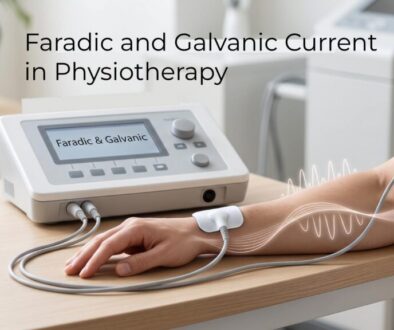
Ultrasound therapy and transcutaneous electrical nerve stimulation (TENS) are sometimes used as supportive modalities in torticollis physiotherapy treatment. Therapeutic ultrasound delivers gentle heat to deep tissues, helping to reduce fibrosis and improve the extensibility of shortened muscles. TENS helps manage pain and muscle spasm, particularly in adult patients with acute or subacute presentations. These modalities are most effective when used as part of a comprehensive program rather than in isolation.
Physiotherapy for Congenital Muscular Torticollis: A Note on Timing
One of the most important messages in the literature is that early intervention produces dramatically better outcomes in CMT. The 2024 APTA Clinical Practice Guideline strongly recommends that infants be referred for physiotherapy assessment as soon as CMT is suspected, ideally within the first few weeks of life.
When physiotherapy is started before 3 months of age, the vast majority of infants achieve full resolution with conservative treatment. When treatment is delayed beyond 12 months, treatment durations lengthen considerably and outcomes become less predictable. Untreated CMT can lead to secondary complications including plagiocephaly (asymmetrical head shape), asymmetrical facial development, and compensatory scoliosis.
If you have concerns about your infant’s head positioning, early assessment by a pediatric physiotherapy specialist is strongly advised.
What Happens During a Physiotherapy Session for Torticollis?
At your first appointment, the physiotherapist will conduct a detailed assessment covering the history of the condition, posture and head position analysis, measurement of cervical range of motion in all planes, palpation of the neck muscles to assess tone, tenderness, and any nodules, and in infants, motor development screening.
Based on the findings, a personalized treatment plan is formulated with clear goals and a realistic timeline. For mild to moderate CMT in young infants, significant improvement is often seen within 4 to 6 weeks of consistent treatment. Adults with acute torticollis may experience substantial relief within a few sessions, while chronic or neurological forms require longer-term management.
Home exercise programs and parental education (for infant cases) are a fundamental part of every treatment plan, as the consistency of daily practice between sessions is key to achieving lasting results.
When to See a Physiotherapist: Warning Signs Not to Ignore
Seek physiotherapy assessment promptly if you notice any of the following.
In infants: persistent head tilting or rotation by 2 to 3 months of age, a lump or thickening in the neck, limited ability to turn the head to one side, or asymmetrical facial development.
In adults: sudden onset of neck pain with inability to rotate the head, recurrent episodes of wry neck, persistent neck stiffness lasting more than a few days, or an involuntary head tremor or pulling sensation in the neck.
Certain accompanying symptoms, such as fever, severe headache, neurological changes, or the sudden onset of torticollis after a significant trauma, require urgent medical evaluation before physiotherapy begins.
Home Care Tips to Support Your Recovery
In addition to attending physiotherapy sessions, there are several things you can do at home to support recovery.
Apply a warm compress to the neck for 10 to 15 minutes before performing your prescribed stretches, as heat improves muscle extensibility. Avoid sleeping on very thick pillows that elevate the head unnaturally, as this contributes to spinal misalignment and can aggravate symptoms. If you work at a desk, set up your screen at eye level and take regular movement breaks every 30 to 45 minutes to prevent muscle fatigue and protective guarding.
For infants, maintain the prescribed tummy time routine daily, vary the baby’s positioning during feeding and carrying, and place interesting objects on the non-preferred side to encourage active head rotation.
Consistency with the home exercise program prescribed by your physiotherapist is the single most important factor in achieving a good outcome.
Torticollis Physiotherapy at Home in Bangalore
At Physio at Your Doorstep, our team of experienced physiotherapists provides expert assessment and treatment for both infant and adult torticollis in the comfort of your home across Bangalore, including JP Nagar, BTM Layout, Jayanagar, Koramangala, HSR Layout, and Whitefield.
Our pediatric physiotherapy service is specifically equipped to manage congenital muscular torticollis in newborns and infants, with gentle, evidence-based techniques and comprehensive parent education. For adults with cervical dystonia, wry neck, or post-traumatic torticollis, our orthopaedic physiotherapy and neurological physiotherapy services provide tailored rehabilitation programs.
If travel is difficult, our online physiotherapy consultation service allows you to receive guidance from our physiotherapists and begin a home program from anywhere in India.
Book an appointment today and take the first step toward restoring normal neck movement.
Resources
- Sargent B, Coulter C, Cannoy J, Kaplan SL. Physical Therapy Management of Congenital Muscular Torticollis: A 2024 Evidence-Based Clinical Practice Guideline. Pediatr Phys Ther. 2024;36(4):370–421. Read on PubMed
- Rodríguez-Huguet M et al. Effectiveness of the Treatment of Physiotherapy in the Congenital Muscular Torticollis: A Systematic Review. Children. 2024;11(1):8. Read on MDPI
- Desai S, Sharath HV. Effect of Pediatric Physical Therapy Interventions on Congenital Muscular Torticollis: A Systematic Review. Cureus. 2024;16(9):e69572. Read on PMC
- APTA Academy of Pediatric Physical Therapy. CMT Clinical Practice Guideline & Implementation Resources
Frequently Asked Questions About Torticollis Physiotherapy Treatment
What is torticollis and how does physiotherapy help?
Torticollis is a condition where the neck muscles cause the head to tilt and rotate abnormally, most often due to shortening or spasm of the sternocleidomastoid muscle. Physiotherapy helps by using stretching, manual therapy, and targeted exercises to lengthen the shortened muscle, restore full range of motion, and correct the underlying postural and muscular imbalances. It is the most effective first-line treatment for both infant and adult forms of the condition.
How long does torticollis physiotherapy treatment take to work?
The duration depends on the type and severity. For infants with congenital muscular torticollis who start treatment before 3 months of age, many achieve full resolution within 4 to 6 weeks. For older infants or adults with acute torticollis, significant improvement is often seen within 3 to 6 weeks of consistent physiotherapy. Chronic or neurological forms, such as cervical dystonia, require longer-term management.
Can torticollis resolve on its own without physiotherapy?
Mild cases of acute torticollis in adults sometimes improve on their own within a few days with rest and heat application. However, congenital muscular torticollis in infants does not reliably self-resolve and requires physiotherapy to prevent secondary complications like plagiocephaly and facial asymmetry. Chronic and neurological torticollis will not improve without treatment.
What exercises are used in physiotherapy for torticollis?
Common exercises include passive and active cervical lateral flexion stretches, head rotation exercises, chin tucks, isometric neck strengthening, and postural exercises targeting the upper back and shoulders. For infants, tummy time and repositioning activities are central. All exercises should be prescribed and taught by a qualified physiotherapist to ensure correct technique and avoid aggravating the condition.
Is physiotherapy for torticollis painful?
Treatment for infant CMT is designed to be gentle and should not cause significant distress, though some discomfort during stretching is normal. For adults with acute torticollis, initial sessions may involve some discomfort, but the goal is always to work within a tolerable range. Pain during any physiotherapy session should be communicated to the therapist immediately so techniques can be adjusted.
What is the difference between congenital and acquired torticollis?
Congenital torticollis is present at or shortly after birth and is caused by structural changes in the SCM muscle during fetal development or delivery. Acquired torticollis develops later in life due to injury, posture, medications, neurological conditions, or other external factors. The physiotherapy approach differs between the two, with congenital cases focusing heavily on stretching and parent education, while adult cases also incorporate postural training and muscle strengthening.
When should I seek urgent medical attention for torticollis?
See a doctor urgently if torticollis appears suddenly after a significant trauma, is accompanied by fever, severe headache, numbness, tingling, or weakness in the arms or hands, or if it develops in an infant without any prior history. These signs can indicate serious conditions such as cervical spine injury, infection, or neurological disease that require medical evaluation before physiotherapy begins.
Can torticollis in infants affect their development if left untreated?
Yes. Untreated congenital muscular torticollis can lead to plagiocephaly (flattening and asymmetry of the skull), asymmetrical facial growth, compensatory curves in the spine, and delays in motor development milestones. Early physiotherapy treatment consistently prevents these secondary complications, which is why early referral and timely intervention are strongly recommended.
Is home physiotherapy effective for torticollis?
Home physiotherapy can be highly effective when it is provided by a qualified, experienced physiotherapist who conducts a proper assessment and teaches the correct techniques. At Physio at Your Doorstep, our physiotherapists bring evidence-based treatment directly to your home across Bangalore, ensuring convenience without compromising quality of care. For infant CMT in particular, having a physiotherapist at home allows for direct observation of feeding and carrying positions and more personalized parent guidance.