GBS Physiotherapy Assessment and Recovery Management Guide
Guillain-Barre Syndrome is one of the most challenging neurological conditions a person can face. One day you feel fine, and within days or weeks, weakness begins spreading upward through the body, sometimes reaching the chest and making it hard to breathe. For many patients and their families, the diagnosis comes as a shock, and the road to recovery feels uncertain.
The good news is that the large majority of GBS patients do recover, and structured physiotherapy is one of the most important factors that determines how well and how quickly that recovery happens. Whether you or a loved one has recently been diagnosed, is in the acute hospital phase, or is transitioning back home, this guide walks you through everything you need to know about GBS physiotherapy assessment, exercise programs, and long-term management, including how home-based physiotherapy in Bangalore can make a real difference.
What Is Guillain-Barre Syndrome (GBS)?
Guillain-Barre Syndrome is an acute autoimmune condition in which the body’s immune system mistakenly attacks the peripheral nervous system. The result is rapid demyelination (damage to the protective myelin sheath surrounding nerves), which disrupts the signals travelling between the brain and the muscles.
GBS typically follows a preceding infection, most commonly a gastrointestinal or upper respiratory tract infection. The incidence is estimated at 0.8 to 1.9 cases per 100,000 people per year globally, with a slightly higher rate in males.
Common subtypes of GBS include:
- Acute Inflammatory Demyelinating Polyradiculoneuropathy (AIDP) – the most common form
- Acute Motor Axonal Neuropathy (AMAN)
- Acute Motor and Sensory Axonal Neuropathy (AMSAN) – a rarer, more severe variant
- Miller Fisher Syndrome (MFS) – characterized by ataxia, areflexia, and ophthalmoplegia
Classic presenting symptoms include:
- Progressive ascending limb weakness, typically beginning in the legs
- Tingling, numbness, or burning sensations (paresthesia)
- Diminished or absent deep tendon reflexes (areflexia)
- Difficulty walking or climbing stairs
- In severe cases, respiratory failure requiring ventilator support
- Autonomic dysfunction such as fluctuating blood pressure and irregular heart rate
The diagnosis is typically confirmed through nerve conduction velocity (NCV) studies and cerebrospinal fluid (CSF) analysis, which are considered the gold standard investigations.
Medical treatment involves immunotherapy, either plasma exchange (plasmapheresis) or intravenous immunoglobulin (IVIg). Both have demonstrated significant efficacy in accelerating recovery. However, medical treatment alone is not enough. Without structured rehabilitation, patients risk prolonged disability, contractures, deconditioning, and reduced quality of life.
This is where neurological physiotherapy becomes essential.
Why Physiotherapy Is Critical in GBS Recovery
Physiotherapy plays a central, irreplaceable role throughout every phase of GBS. The aims are not just to get patients walking again, but to address the full spectrum of physical deficits that GBS creates.
According to published research, physiotherapy in GBS patients aims to:
- Accelerate functional recovery and reduce overall disability
- Prevent secondary complications such as pressure sores, deep vein thrombosis, and joint contractures
- Support and protect respiratory function
- Improve muscle strength, balance, endurance, and coordination
- Manage fatigue, which affects approximately 13% of GBS patients
- Restore safe mobility and independence in daily activities
- Reduce the length of hospital stay and the financial burden on families
- Improve overall quality of life
A key principle that every GBS physiotherapist must remember is that over-exercising can cause immediate and irreversible harm. This is not a condition where you push through the pain and fatigue. Exercise progression in GBS must be carefully calibrated to the patient’s daily status, nerve recovery signals, and tolerance, making professional supervision absolutely non-negotiable, especially in the early phases.
GBS Physiotherapy Assessment: What to Expect
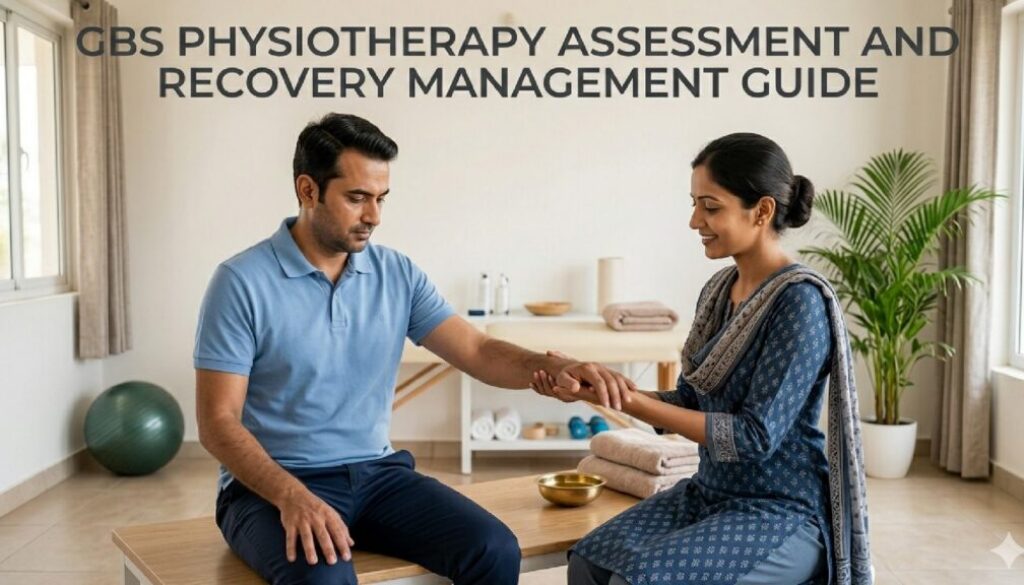
A thorough physiotherapy assessment is the foundation of any effective GBS rehabilitation program. Because GBS varies enormously between patients in severity, pace of progression, and the nerves affected, no two assessment findings are identical, and no two treatment programs should look the same.
Key Components of a GBS Physiotherapy Assessment
- Detailed Subjective History
The physiotherapist begins by understanding the timeline of symptom onset, the nature and distribution of weakness, any respiratory involvement, prior function before illness, and the patient’s goals for recovery.
- Neurological Screening
- Sensory testing to assess light touch, pin-prick, vibration, and proprioception
- Reflex testing to document the presence, absence, or asymmetry of deep tendon reflexes
- Cranial nerve assessment when relevant (GBS can affect facial muscles, swallowing, and eye movements in some variants)
- Manual Muscle Testing (MMT)
Muscle strength is graded systematically using the MRC (Medical Research Council) scale from 0 (no contraction) to 5 (normal strength), documenting which muscle groups are affected and by how much. Distal muscles (hands and feet) are typically weaker than proximal muscles in most GBS variants.
- Respiratory Assessment
Respiratory physiotherapy is critical when GBS involves the diaphragm or intercostal muscles. The physiotherapist assesses:
- Vital capacity (VC) and forced expiratory volume
- Ability to cough effectively
- Oxygen saturation and breathing pattern at rest and on exertion
- Functional Outcome Measures
Standardized tools used in GBS physiotherapy assessment include:
- GBS Disability Score / Hughes Disability Scale – Rates functional disability from 0 (no symptoms) to 6 (requiring ventilation)
- Functional Independence Measure (FIM) – Measures independence across mobility, self-care, and cognition domains
- Berg Balance Scale (BBS) – Assesses static and dynamic balance ability
- Six-Minute Walk Test (6MWT) – Evaluates functional exercise capacity and endurance
- Fatigue Severity Scale (FSS) – Quantifies the impact of fatigue on daily function
- Cardiovascular and Autonomic Monitoring
Because GBS can cause autonomic instability, heart rate and blood pressure responses are monitored during any exercise or mobilization. Changes such as postural hypotension must be identified and managed during therapy sessions.
- Pain and Sensory Assessment
Neuropathic pain, aching, and hypersensitivity are common in GBS. These must be documented so the exercise program and physical handling can be adapted appropriately.
This comprehensive assessment allows the physiotherapist to set realistic short-term and long-term rehabilitation goals and design a structured, phased exercise program.
Phases of GBS Physiotherapy Management
GBS rehabilitation is not a single intervention. It unfolds across clearly defined phases that follow the natural course of the disease: the acute (progressive) phase, the plateau phase, and the recovery phase. Each phase demands a different physiotherapy approach.
Phase 1: Acute and Plateau Phase (Hospital / ICU)
This is the period when symptoms are still worsening or have recently stabilized. The priorities here are safety, preventing complications, and laying the groundwork for recovery.
Physiotherapy goals in Phase 1:
- Positioning: Careful positioning of the limbs to prevent pressure injuries, nerve compression, and contractures
- Passive Range of Motion (PROM) exercises: Gentle, therapist-guided movements through the full range of motion of all joints to maintain flexibility and circulation
- Chest physiotherapy: Techniques such as assisted coughing, postural drainage, vibration, and percussion to clear secretions and support breathing
- Respiratory exercises: Diaphragmatic breathing techniques, incentive spirometry, and controlled breathing to maintain lung capacity
- Splinting and orthotics: Foot drop splints and resting hand splints as needed to maintain correct joint positioning
- Sensory stimulation: Light tactile stimulation and proprioceptive inputs to maintain neural awareness
- Patient and family education: Teaching safe handling, turning schedules, and what to expect as recovery begins
At this stage, exercise intensity is minimal. The physiotherapist is primarily protecting the body and keeping the nervous system gently engaged without creating overuse fatigue.
Warning signs that require pausing exercise:
- Significant drop in oxygen saturation during movement
- Autonomic instability (rapid heart rate fluctuations, blood pressure swings)
- Delayed onset muscle soreness worsening 1 to 5 days after exercise (a key sign of overuse weakness in GBS)
- Excessive fatigue that does not resolve with rest
Phase 2: Early Recovery Phase
Once the patient stabilises and nerve remyelination begins (typically 2 to 4 weeks after the peak of symptoms), the rehabilitation intensity gradually increases. The Schwann cells begin to proliferate, inflammation reduces, and remyelination starts. However, the new myelin sheath is initially thinner, and nerve conduction remains slower than normal, which is why progression must remain gradual.
Physiotherapy goals in Phase 2:
- Active Assisted Range of Motion (AAROM): The patient begins contributing to movement with therapist assistance
- Active Range of Motion (AROM): Once muscle power reaches grade 2-3 on the MRC scale, patients begin performing movements without assistance
- Functional mobility training: Rolling in bed, sitting at the edge, transitional movements from sit to stand
- Tilt table use: For patients with severe weakness or autonomic instability, a tilt table allows gradual upright positioning without the cardiovascular demands of standing
- Basic strengthening: Resistance is introduced only when muscle power reaches at least MRC grade 3
- Balance training: Starting with static seated balance, progressing to standing balance with support
- Progressive ambulation: Short-distance walking with walking aids, building tolerance over sessions
- Hydrotherapy (aquatic physiotherapy): The buoyancy of water reduces the demand on weakened muscles and allows earlier active movement
Research from published RCTs confirms that a progressive functional exercise program significantly improves total FIM scores, muscle performance sub-scores, and independent mobility in GBS patients during this phase.
Phase 3: Later Recovery and Community Reintegration
This is the reconditioning phase, which can extend for 6 months or longer. Published guidelines recommend continuing home and/or outpatient physiotherapy for more than 6 months because functions can continue improving well into this period.
Physiotherapy goals in Phase 3:
- Progressive resistance training: Using free weights, resistance bands, or gym equipment to rebuild strength in the limbs and core
- Aerobic conditioning: Cycling (including stationary cycling) has the strongest evidence base in GBS. Research shows exercise programs lasting around 12 weeks, with 30 to 60 minutes of activity three times per week at 70 to 90 percent of maximum heart rate, produced significant functional improvements
- Endurance training: Walking programs, treadmill training, and stair climbing
- Advanced balance and proprioception: Single-leg activities, unstable surfaces, virtual reality-assisted training
- Task-specific functional training: Dressing, kitchen activities, driving preparedness, return to work or sport
- Fatigue management strategies: Energy conservation techniques, pacing, activity scheduling
- Home exercise programs: A structured, written home exercise program supports continuity between formal therapy sessions. Studies confirm that while supervised programs produce greater gains, unsupervised home programs should not be neglected as they play a valuable role in the chronic phase
GBS Exercises: A Phase-by-Phase Overview
Below is a practical overview of evidence-based exercises used at each stage of GBS rehabilitation.
Breathing and Respiratory Exercises
- Diaphragmatic breathing: Lying or sitting, inhale deeply through the nose allowing the abdomen to rise, then exhale slowly through pursed lips. This strengthens the diaphragm and improves lung capacity.
- Incentive spirometry: A device that encourages deep, sustained inhalation to prevent lung collapse (atelectasis)
- Assisted cough techniques: Manual or self-assisted techniques to mobilize secretions when cough strength is reduced
Passive and Active Range of Motion
- Ankle pumps and circles (prevents deep vein thrombosis)
- Knee flexion and extension in supine
- Hip abduction and adduction
- Shoulder pendulum exercises
- Wrist and finger tendon gliding exercises
Strengthening Exercises (Grade 3 and Above)
- Straight leg raises
- Bridging (gluteal and hip strengthening)
- Terminal knee extension with resistance band
- Seated marching
- Wall push-ups or bench press for upper limb strength
- Grip strengthening with therapy putty or hand exercisers
Balance and Proprioception
- Sitting unsupported on a plinth, progressively reducing upper limb support
- Standing with two-point, one-point, and no support
- Tandem stance and tandem walking
- Step-up and step-down exercises
- Balance board training
- Single-leg stance with eyes open and closed
Aerobic and Endurance Training
- Stationary cycling (low resistance initially, building to 70-90% max heart rate)
- Treadmill walking with graded incline progression
- Pool walking or swimming
- Community walking programs
An important note: signs of overuse in GBS include delayed onset of muscle soreness that worsens 1 to 5 days after exercise. If this occurs, exercise intensity must be immediately reduced. The physiotherapist should monitor for this at every session.
The Role of Home Physiotherapy in GBS Recovery
For many GBS patients, the transition from hospital to home is one of the most anxiety-inducing moments of recovery. The structure and supervision of the hospital setting disappears, and the patient and family must suddenly manage a complex rehabilitation program on their own.
This is where home physiotherapy fills a critical gap. At Physio at Your Doorstep, our specialist neurological physiotherapists travel to patients across Bangalore, including JP Nagar, BTM Layout, Jayanagar, Koramangala, HSR Layout, and Whitefield, to deliver professional, personalized GBS rehabilitation directly at home.
Benefits of home physiotherapy for GBS patients:
- Safe and familiar environment reduces fall risk and anxiety
- Eliminates transportation challenges for patients with residual weakness
- The physiotherapist can assess and adapt the home environment (removing trip hazards, recommending grab rails)
- Family members receive training in safe handling, positioning, and assistance techniques
- Exercises are practiced in the actual spaces and situations the patient lives in, making functional carryover stronger
- Continuity of care is maintained through the crucial months following hospital discharge
Our neurological physiotherapy service is specifically designed for complex conditions like GBS, stroke, Parkinson’s disease, and multiple sclerosis. Our physiotherapists use standardized outcome measures at every assessment to track your progress objectively and adjust your program accordingly.
For patients who prefer or require remote support, we also offer online physiotherapy consultation to provide guidance, exercise prescription reviews, and progress monitoring via video.
GBS Physiotherapy and Complications: What to Watch For
Good physiotherapy management also involves monitoring for and addressing common complications of GBS that can delay recovery:
Fatigue: Fatigue is one of the most persistent and disabling symptoms in GBS survivors. It does not simply mean being tired. It is a neurological fatigue that affects both physical and cognitive function. Energy conservation techniques, pacing strategies, and progressive aerobic conditioning are the physiotherapy tools used to manage this.
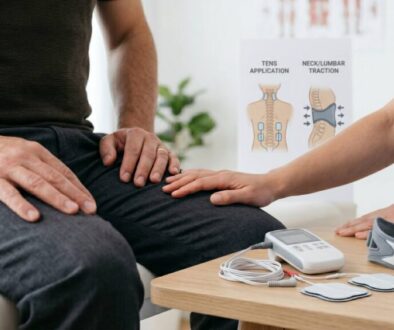
Neuropathic pain: Many GBS patients experience ongoing burning, stabbing, or aching pain as nerves regenerate. While medication is often prescribed, physiotherapy modalities such as TENS (Transcutaneous Electrical Nerve Stimulation), hydrotherapy, and gentle desensitization techniques can provide meaningful relief.
Foot drop: Weakness of the dorsiflexor muscles causes foot drop, increasing the risk of trips and falls. Ankle-foot orthoses (AFOs), gait retraining, and targeted dorsiflexion strengthening are core components of management.
Joint contractures: Prolonged immobility in the acute phase can lead to tightening of joints, particularly the ankles, hips, and knees. Daily stretching and positioning are essential preventive measures.
Psychological impact: GBS has a significant psychological toll. Anxiety, depression, and post-traumatic stress are common. While the physiotherapist is not a psychologist, the therapeutic relationship built through regular sessions provides important psychological support, and referral to a clinical psychologist should be made when needed.
How Long Does GBS Physiotherapy Take?
Recovery from GBS is highly individual. Research consistently shows substantial strength gains in the initial 6 months, with many patients continuing to improve for 12 to 18 months or longer. The two-phase rehabilitation model, with early intervention to reduce disability and later reconditioning to restore function, provides the best outcomes.
On average, published studies document physiotherapy programs lasting 8 to 16 weeks as inpatient or outpatient interventions, but the home-based component extends significantly beyond this. The key message is that recovery is not linear. There will be good days and difficult days, unexpected improvements and frustrating plateaus. A qualified physiotherapist will help you interpret these fluctuations and maintain a realistic, motivating path forward.
When to Start GBS Physiotherapy
Physiotherapy should begin as early as medically stable, even in the ICU. Early intervention in the acute phase prevents complications and positions the patient for a stronger, faster recovery. The physiotherapist works closely with the medical team in the hospital and then provides continuity of care through the outpatient and home phase.
If you or a family member has been discharged from hospital following GBS and have not yet commenced structured physiotherapy, it is not too late. Functions can continue to improve for many months, and starting rehabilitation, even weeks after discharge, can still produce meaningful gains.
To book a home physiotherapy assessment with our specialist team in Bangalore, visit our booking page or call us at +91 82337 87737.
Resources
- Kieseier BC, Hartung HP. Current treatment strategies for Guillain-Barre syndrome. Current Opinion in Neurology. 2003.
- Arsenault NS et al. Influence of Exercise on Patients with Guillain-Barre Syndrome: A Systematic Review. Physical Therapy. 2016. PMC5125499
- Khanna R et al. Physical Exercise in Guillain-Barre Syndrome: A Scoping Review. Journal of Clinical Medicine. 2025. PMC12028042
- Shah A et al. Physiotherapy for Guillain-Barre Syndrome: A Case Report. MGM Journal of Medical Sciences. 2024.
- National Institute of Neurological Disorders and Stroke (NINDS). Guillain-Barre Syndrome Fact Sheet. Available at: www.ninds.nih.gov