PIVD Physiotherapy Treatment: Non-Surgical Healing Guide
Living with back pain that radiates down your leg can feel overwhelming. If you’ve been diagnosed with PIVD (Prolapsed Intervertebral Disc), also known as a herniated or slipped disc, you’re likely searching for effective treatment options that can help you recover without surgery. The good news? Physiotherapy offers a proven, evidence-based approach to managing PIVD symptoms and supporting complete recovery for most patients.
In this comprehensive guide, we’ll explore everything you need to know about PIVD physiotherapy treatment and recovery, including treatment techniques, recovery timelines, exercises, and how home-based physiotherapy can accelerate your healing journey.
Understanding PIVD: What Happens to Your Spine?
Before diving into treatment options, it’s essential to understand what PIVD actually means and how it affects your body.
What is Prolapsed Intervertebral Disc?
PIVD occurs when the soft, gel-like center of an intervertebral disc (nucleus pulposus) pushes through a tear or weakness in the tough outer layer (annulus fibrosus). Think of it like a jelly-filled donut where the filling squeezes out through a crack in the dough.
Your spine consists of 33 vertebrae stacked on top of each other, with intervertebral discs acting as shock absorbers between them. These discs allow flexibility and movement while protecting your spine from daily stresses.
Stages of Disc Herniation
PIVD doesn’t happen overnight. It typically progresses through several stages:
Disc Degeneration: The disc begins to weaken due to age, wear and tear, or repeated stress. The water content in the disc decreases, making it less flexible.
Disc Bulging: The disc stretches and doesn’t completely return to its normal shape. A slight bulge appears on one side, though the outer layer remains intact.
Disc Protrusion: The bulge becomes more prominent, and the inner gel material pushes to the edge of the outer fibers but hasn’t broken through completely.
Disc Extrusion: The nucleus pulposus breaks through the outer layer and protrudes into the spinal canal, potentially compressing nearby nerves.
Sequestration: Fragments of the disc material break away and move into the spinal canal, the most severe stage of herniation.
Common Symptoms of PIVD
The symptoms you experience depend on the location and severity of the disc herniation:
- Localized back pain or neck pain
- Radiating pain down the leg (sciatica) or arm
- Numbness or tingling in extremities
- Muscle weakness in affected areas
- Loss of reflexes
- Difficulty standing or walking for extended periods
- Pain that worsens with sitting, bending, or lifting
Important Note: Some people with disc herniation may have minimal or no symptoms at all. Research shows that approximately 60% of asymptomatic middle-aged individuals have findings of disc bulge or worse on MRI scans, yet experience no pain.
Why Physiotherapy is the First Line of Treatment for PIVD
If you’ve been recently diagnosed with PIVD, your doctor has likely recommended physiotherapy before considering surgical options. Here’s why this approach makes clinical sense.
Evidence-Based Effectiveness
Research demonstrates that physiotherapy interventions lead to significant improvements in pain and disability for patients with lumbar PIVD. A comprehensive meta-analysis of multiple clinical trials revealed substantial reductions in both pain levels and functional limitations following physiotherapy management.
The beauty of physiotherapy lies in its safety profile. Unlike surgical interventions, physiotherapy has no complications, no recovery downtime, and is significantly more cost-effective. Studies show physiotherapy can be used as the first-line management approach before considering invasive surgical procedures.
How Physiotherapy Works for PIVD Recovery
Physiotherapy addresses PIVD through multiple mechanisms:
Mechanical Correction: Specific techniques help reposition the displaced disc material, reducing pressure on affected nerves.
Decompression: Treatment creates negative pressure within the disc space, allowing the herniated material to retract.
Foraminal Opening: Manual therapy and mobilization techniques widen the space where nerve roots exit the spine.
Increased Intervertebral Space: Traction and postural correction increase the distance between vertebrae, relieving compression.
Muscle Strengthening: Core stabilization exercises provide better support for the spine, preventing future injuries.
Pain Management: Various modalities reduce pain signals and promote healing in affected tissues.
Comprehensive PIVD Physiotherapy Treatment Approaches
Effective PIVD management requires a multifaceted approach tailored to your specific condition, pain level, and functional goals. Let’s explore the primary treatment modalities used by skilled physiotherapists.
1. Manual Therapy Techniques
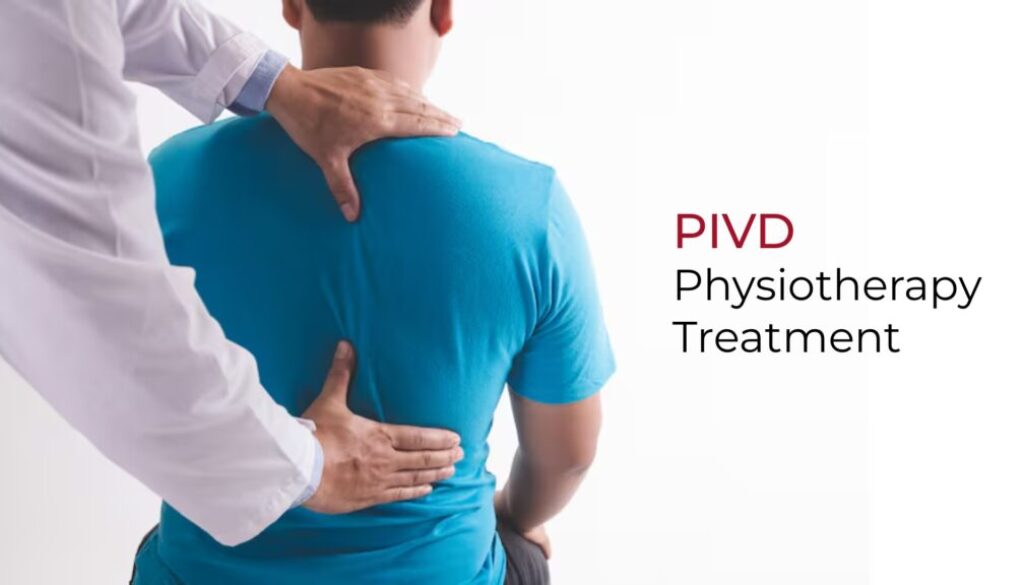
Manual therapy forms the foundation of hands-on PIVD treatment. Your physiotherapist uses skilled hand movements to mobilize joints, release tight muscles, and improve spinal alignment.
Spinal Mobilization: Gentle, rhythmic movements applied to spinal joints improve mobility and reduce stiffness. These techniques are particularly effective in the subacute phase of recovery.
Soft Tissue Manipulation: Targets muscle spasms, trigger points, and fascial restrictions that contribute to pain. This includes massage techniques, myofascial release, and post-isometric relaxation methods.
Joint Manipulation: In some cases, physiotherapists may perform controlled, high-velocity thrusts to restore normal joint mechanics. This technique should only be performed by trained professionals.
Neural Mobilization: Specialized techniques that gently stretch and mobilize affected nerves, reducing nerve-related symptoms like radiating pain and numbness.
2. Traction Therapy
Traction is one of the most effective non-surgical treatments for disc herniation. It works by creating space between vertebrae, reducing disc pressure, and allowing herniated material to retract.
Mechanical Traction: Uses a traction device to apply consistent pulling force along the spine. For lumbar PIVD, the force typically equals one-third of your body weight.
Manual Traction: Your physiotherapist applies hands-on traction, allowing for immediate adjustments based on your response and comfort level.
Intermittent vs. Sustained Traction: Intermittent traction alternates between pulling and releasing (typically 15 seconds hold, 5 seconds rest), while sustained traction maintains constant force.
Treatment Duration: In acute phases, traction sessions are kept short (10-15 minutes for intermittent, under 10 minutes for sustained) to prevent fluid imbibition that could increase disc pressure.
3. Electrotherapy Modalities
Modern physiotherapy incorporates various electrical and thermal modalities to manage pain and promote healing.
TENS (Transcutaneous Electrical Nerve Stimulation): Delivers electrical impulses that block pain signals from reaching your brain. Typically administered with 300μ impulse at 50-100 Hz frequency for 15-20 minutes. TENS provides immediate pain relief without medication side effects.
Interferential Therapy (IFT): Uses intersecting electrical currents to penetrate deeper into tissues. Effective at 90-100 Hz frequency for pain syndrome management.
Ultrasound Therapy: High-frequency sound waves create deep tissue heating, increasing blood flow and promoting healing. When combined with anti-inflammatory gel (phonophoresis), it enhances the extensibility of connective tissues.
Shortwave Diathermy (SWD): Provides deep heat therapy. Pulsed SWD is used in acute conditions, while continuous SWD benefits chronic cases.
Cryotherapy: Ice application in the acute phase reduces inflammation and pain. Apply cold packs 4-5 times daily for 10 minutes each session during the first 48-72 hours.
4. McKenzie Method
The McKenzie approach is specifically designed for spinal conditions like PIVD. This method uses repeated movements and sustained positions to “centralize” pain, meaning the pain moves from your leg or arm back toward the spine.
The principle is simple: if certain movements make your radiating symptoms retreat toward your back or neck, these movements promote healing. Your physiotherapist will identify your “directional preference” (the direction of movement that centralizes pain) and prescribe exercises accordingly.
Most PIVD patients respond well to extension-based exercises, though some may require flexion or lateral movements depending on their specific disc pathology.
5. Core Stabilization and Strengthening
Weak core muscles contribute significantly to spinal instability and recurrent back problems. A comprehensive strengthening program is essential for long-term recovery and prevention.
Deep Abdominal Training: Focuses on the transversus abdominis and multifidus muscles that provide segmental stability to the spine.
Progressive Resistance Training: Gradually increases the challenge to build strength without aggravating symptoms.
Functional Movement Training: Teaches proper body mechanics for daily activities like lifting, bending, and carrying objects.
Phase-by-Phase PIVD Recovery Protocol
Recovery from PIVD follows a predictable pattern. Understanding each phase helps set realistic expectations and guides appropriate activity levels.
Acute Phase (Week 1-2)
Primary Goals: Reduce pain and inflammation, prevent symptom aggravation, promote initial healing.
Treatment Focus:
- Controlled rest (but not complete bed rest, which can worsen outcomes)
- Pain-relieving modalities (TENS, IFT, ice therapy)
- Gentle traction if tolerated
- Postural education
- Activity modification
- Use of lumbar support (corset or binder) when necessary
What to Avoid: Flexion postures, prolonged sitting, heavy lifting, bending, twisting movements, any activity that reproduces leg pain.
Expected Progress: Pain should begin decreasing within 7-10 days. You may notice centralization of symptoms, where leg pain diminishes while back pain initially increases slightly (this is a positive sign of healing).
Subacute Phase (Week 3-6)
Primary Goals: Improve mobility, begin strengthening, restore functional movement patterns.
Treatment Focus:
- Progressive range of motion exercises
- Introduction of core stabilization exercises
- Manual therapy techniques
- Continued modalities as needed
- Gradual increase in activity levels
- Postural retraining
What to Expect: Pain levels continue decreasing. You’ll start regaining confidence in movement. Many patients return to light daily activities and desk work during this phase with proper ergonomic setup.
Rehabilitation Phase (Week 7-12)
Primary Goals: Restore full function, prevent recurrence, return to normal activities.
Treatment Focus:
- Advanced strengthening exercises
- Sport or work-specific training
- Balance and proprioception exercises
- Maintenance exercise program
- Lifestyle modification counseling
Return to Activity: Most patients can gradually resume normal activities, including work and recreational pursuits. However, high-impact sports and heavy manual labor may require additional time.
Maintenance Phase (Week 12+)
Primary Goals: Maintain strength and flexibility, prevent recurrence.
Ongoing Practices:
- Continue core exercises 2-3 times weekly
- Maintain proper posture and body mechanics
- Regular physical activity
- Periodic physiotherapy check-ins as needed
Essential PIVD Exercises for Recovery
Exercise is crucial for PIVD recovery. Here are the most effective evidence-based exercises, categorized by phase and purpose. Always perform these under professional guidance initially to ensure proper form.
Extension Exercises (for most lumbar PIVD cases)
Prone Press-Ups (McKenzie Extension)
Lie face down with hands positioned under shoulders. Gently press your upper body up while keeping your hips on the floor. Hold for 2-3 seconds, then lower. Repeat 10 times, several times daily. This exercise helps push the disc material back toward the center.
Standing Back Extensions
Stand with feet shoulder-width apart, hands on lower back. Gently arch backward, looking up at the ceiling. Hold for 2-3 seconds. Repeat 10 times. Perform this exercise regularly, especially after prolonged sitting.
Core Stabilization Exercises
The Bridge
Lie on your back with knees bent at 90 degrees, feet flat on the floor. Tighten your abdominal muscles, then lift your buttocks off the floor. Your body should form a straight line from shoulders to knees. Hold for 5 seconds, then lower slowly. Repeat 5-15 times.
The Plank
Start in a push-up position, but rest on your forearms instead of hands. Keep your body in a straight line from head to heels. Hold for 10 seconds initially, gradually increasing to 30-60 seconds as strength improves. Repeat 5-10 times.
Side Plank
Lie on your right side, supported by your right forearm. Stack your feet and lift your hips off the floor, creating a straight line from head to feet. Hold for 10 seconds. Repeat 5 times per side. Strengthens oblique muscles crucial for spinal stability.
Stretching and Flexibility Exercises
Piriformis Stretch
Lie on your back, cross your affected leg over the opposite knee. Pull the bottom knee toward your chest until you feel a stretch in your buttock. Hold for 30 seconds. Repeat 3-5 times.
Hamstring Stretch
Lie on your back, loop a towel around one foot. Keeping your knee straight, gently pull the leg toward your chest. Hold for 30 seconds. Repeat 3-5 times per leg. Tight hamstrings increase stress on the lower back.
Strengthening Exercises
Leg and Arm Raises (Superman)
Lie face down, arms extended overhead. Simultaneously lift your right arm and left leg, holding for 5 seconds. Switch sides. Repeat 5-10 times. Strengthens back and hip muscles crucial for spinal support.
Wall Squats
Stand with your back against a wall, feet shoulder-width apart and about 18 inches from the wall. Slide down into a squat position (knees bent to 90 degrees if possible). Hold for 5 seconds. Slide back up. Repeat 5-10 times.
PIVD Recovery Timeline: What to Expect
Recovery from PIVD varies significantly based on several factors, but understanding typical timelines helps manage expectations.
Factors Affecting Recovery Speed
- Severity of herniation: Bulges typically resolve faster than complete extrusions
- Location of disc: Cervical discs may heal faster than lumbar discs
- Age: Younger patients generally recover more quickly
- Overall health: Conditions like diabetes or smoking slow healing
- Treatment adherence: Consistent physiotherapy and exercise accelerate recovery
- Occupational factors: Sedentary or heavy labor jobs impact healing
- Previous episodes: Recurrent PIVD may take longer to resolve
Typical Recovery Timelines
Mild to Moderate PIVD: 6-12 weeks with consistent conservative treatment. Many patients experience significant improvement within 3-4 weeks.
Severe PIVD: 3-6 months for substantial recovery. Some residual symptoms may persist for up to a year but continue improving with proper management.
Post-Surgical Recovery: If surgery becomes necessary, physiotherapy typically begins within 2-4 weeks post-operation, with full recovery taking 3-6 months.
Signs Your Treatment is Working
- Pain intensity decreasing week by week
- Centralization of symptoms (leg or arm pain moving toward spine)
- Increased range of motion
- Ability to sit or stand for longer periods
- Reduced need for pain medication
- Improved sleep quality
- Greater confidence in movement
- Return to daily activities without flare-ups
The Advantages of Home-Based PIVD Physiotherapy
While traditional clinic-based physiotherapy offers excellent care, home-based treatment provides unique benefits that can enhance your recovery experience and outcomes.
Convenience and Comfort
Recovery happens in your most comfortable environment. There’s no need to travel to a clinic while experiencing acute pain, eliminating the stress of commuting and waiting rooms. Treatment sessions can be scheduled around your daily routine, making it easier to maintain consistency.
Personalized Environmental Assessment
When your physiotherapist visits your home, they can evaluate your actual living and working environment. They’ll provide specific recommendations for:
- Ergonomic improvements to your workstation
- Optimal sleeping positions and pillow support
- Home modifications to reduce spine stress
- Safe movement strategies for your specific home layout
This real-world assessment is impossible to replicate in a clinical setting and can significantly impact your recovery.
Better Treatment Adherence
Research shows that patients receiving home-based physiotherapy demonstrate higher adherence rates to their treatment programs. The convenience factor removes common barriers to attending sessions, and having exercises demonstrated in your own space makes them easier to remember and incorporate into daily routines.
Family Involvement and Education
Home sessions allow family members to participate in education, learning how to support your recovery. They can observe proper techniques, understand activity restrictions, and provide appropriate assistance when needed.
One-on-One Attention
Home-based physiotherapists typically manage fewer clients than those in busy clinics, allowing for longer, more focused treatment sessions. You receive undivided attention without the distractions common in clinical environments.
If you’re in Bangalore and seeking expert PIVD treatment at home, Physio At Your Doorstep offers professional, evidence-based care delivered to your doorstep by experienced physiotherapists.
Preventing PIVD Recurrence: Long-Term Strategies
Successfully recovering from PIVD is just the beginning. Preventing recurrence requires ongoing commitment to spinal health.
Maintain Core Strength
Continue performing core stabilization exercises 2-3 times weekly even after symptoms resolve. Strong abdominal and back muscles provide essential support for your spine, reducing the risk of future herniation.
Practice Proper Body Mechanics
Learn and consistently apply safe lifting techniques:
- Bend at the knees, not the waist
- Keep the object close to your body
- Avoid twisting while lifting
- Push rather than pull heavy objects when possible
- Ask for help with heavy or awkward items
Optimize Your Workspace Ergonomics
If you work at a desk, proper ergonomic setup is crucial:
- Monitor at eye level to prevent neck strain
- Chair with lumbar support
- Feet flat on the floor or footrest
- Keyboard and mouse at elbow height
- Take movement breaks every 30-40 minutes
For those working from home, consider corporate wellness physiotherapy programs that can assess and optimize your home office setup.
Maintain Healthy Body Weight
Excess weight, particularly around the abdomen, increases stress on your lumbar spine. Maintaining a healthy BMI through balanced nutrition and regular exercise significantly reduces recurrence risk.
Stay Active
Regular physical activity keeps your spine healthy and flexible. Low-impact activities particularly beneficial for spine health include:
- Walking
- Swimming
- Cycling
- Yoga (with appropriate modifications)
- Tai Chi
Avoid prolonged periods of inactivity. Your spine needs movement to stay healthy.
Address Risk Factors
Smoking reduces blood flow to spinal discs, impairing healing and increasing degeneration risk. If you smoke, quitting is one of the best things you can do for your spine health.
When to Consider Additional Interventions
While physiotherapy successfully manages most PIVD cases, certain situations may warrant additional medical interventions.
Warning Signs Requiring Immediate Medical Attention
Seek emergency care if you experience:
- Cauda Equina Syndrome: Loss of bowel or bladder control, numbness in the saddle area (around the anus), weakness in both legs. This is a medical emergency requiring immediate surgical intervention.
- Progressive Neurological Deficits: Rapidly worsening weakness in legs or arms
- Severe, Intractable Pain: Pain that doesn’t respond to conservative treatment and significantly impacts your quality of life
When Surgery Might Be Necessary
Surgery is typically considered only after 6-12 weeks of conservative treatment without adequate improvement, or in cases of severe neurological compromise. Common surgical procedures include:
- Microdiscectomy: Removes the herniated portion of the disc through a small incision
- Laminectomy: Removes part of the vertebral bone to create more space for nerves
- Disc Replacement: Replaces the damaged disc with an artificial one
Even if surgery becomes necessary, post-surgical physiotherapy remains crucial for optimal recovery and preventing future problems.
Integrating PIVD Care with Other Physiotherapy Services
PIVD doesn’t exist in isolation. Your overall health and other conditions impact your recovery and should be addressed holistically.
Special Considerations for Different Populations
Elderly Patients: Older adults with PIVD often present with additional concerns like balance deficits and fall risk. Geriatric physiotherapy programs address these interconnected issues comprehensively.
Athletes: Sports-related PIVD requires sport-specific rehabilitation. Sports physiotherapy programs focus on safe return to athletic activities and performance optimization.
Pregnant Women: Pregnancy-related back pain and PIVD require specialized approaches. Physiotherapy in pregnancy provides safe, effective treatment tailored to maternal and fetal needs.
Neurological Conditions: If PIVD occurs alongside neurological conditions like stroke or Parkinson’s, neurological physiotherapy offers integrated care addressing multiple systems.
Comprehensive Orthopedic Care
PIVD often coexists with other musculoskeletal conditions like arthritis, muscle strains, or joint problems. Orthopaedic physiotherapy provides comprehensive treatment for all your skeletal and muscular concerns.
Living Well with PIVD: Lifestyle Modifications
Beyond formal treatment, daily lifestyle choices significantly impact your recovery and long-term spine health.
Sleep Optimization
Proper sleep positioning reduces spine stress and promotes healing:
Back Sleepers: Place a pillow under your knees to maintain natural lumbar curve Side Sleepers: Keep a pillow between your knees to align your hips and spine Avoid: Stomach sleeping, which hyperextends the neck and lower back
Invest in a supportive mattress that’s not too soft or too firm. Medium-firm mattresses typically provide optimal spinal support.
Nutrition for Disc Health
While diet alone can’t cure PIVD, proper nutrition supports healing:
- Anti-inflammatory foods: Fatty fish, berries, leafy greens, nuts, olive oil
- Hydration: Adequate water intake maintains disc hydration and height
- Calcium and Vitamin D: Support bone health
- Protein: Essential for tissue repair
- Avoid: Excessive sugar, processed foods, and alcohol that promote inflammation
Stress Management
Chronic stress increases muscle tension and pain perception. Incorporate stress-reduction techniques:
- Deep breathing exercises
- Meditation or mindfulness
- Gentle yoga (with modifications)
- Progressive muscle relaxation
- Hobbies and activities you enjoy
Temperature Therapy at Home
Apply ice packs during acute flare-ups (first 48-72 hours) for 10-15 minutes at a time, 4-5 times daily. After the acute phase, heat therapy can relax muscles and increase blood flow. Alternate between heat and ice if beneficial.
Conclusion: Your Path to Recovery Starts Today
PIVD diagnosis doesn’t have to mean a life limited by pain. With proper physiotherapy treatment, the vast majority of patients achieve excellent outcomes, returning to their normal activities without surgery.
The key to successful recovery lies in three fundamental principles: early intervention, consistent adherence to your treatment program, and maintaining long-term spinal health habits. Whether you choose traditional clinic-based care or the convenience of home-based services, working with qualified physiotherapists ensures you receive evidence-based, personalized treatment tailored to your specific needs.
Remember that recovery is a journey, not a destination. Each day of consistent effort brings you closer to pain-free movement and improved quality of life. Don’t let back pain and nerve symptoms control your life—take the first step toward recovery today.
If you’re in Bangalore and ready to begin your PIVD recovery journey, Physio At Your Doorstep brings expert physiotherapy care directly to your home. Our experienced team specializes in evidence-based PIVD treatment, supporting you every step toward complete recovery.
Helpful Resources
For more information on related physiotherapy services:
- Cervical PIVD Physiotherapy Treatment
- Back Pain Relief and Management
- Orthopaedic Physiotherapy Services
- Post-Surgical Rehabilitation
- Sports Injury Treatment
- Geriatric Physiotherapy Care
Medical References
- A systematic review and meta-analysis on the efficacy of physiotherapy intervention in management of lumbar prolapsed intervertebral disc – PMC (National Center for Biotechnology Information)
- Physiotherapy Treatment for PIVD – Evidence-based clinical guidelines
- International Journal of Healthcare Sciences – Comprehensive rehabilitation approaches for PIVD
- McKenzie Institute International – McKenzie Method for disc disorders
- Otago Home Exercise Program – Evidence-based fall prevention and strength training
Disclaimer: This article is for educational purposes only and does not replace professional medical advice. Always consult with qualified healthcare providers for diagnosis and treatment of disc conditions. Individual results may vary based on multiple factors including condition severity, overall health, and treatment adherence.