Disc Bulge Physiotherapy Treatment for L3 L4 L5 Guide 2026
If you have just been told you have a disc bulge at L3-L4, L4-L5, or L5-S1, you are probably dealing with lower back pain, leg discomfort, or stiffness that is getting in the way of ordinary life. You may also be wondering whether this means surgery is coming or whether you will ever move freely again.
Here is the reassuring part. Disc bulges are extremely common, and most of them respond well to conservative care. Studies using MRI scans have found that a large percentage of people with no back pain at all still show disc bulges on imaging, which means a bulge alone does not automatically equal disability or surgery. What matters is matching the right physiotherapy treatment to your specific spinal level and symptoms.
This guide walks you through exactly that: what an L3, L4, or L5 disc bulge is, why these lower lumbar levels are so commonly affected, how physiotherapists assess and treat each level differently, and what a realistic recovery timeline looks like. It is written for people searching for real answers, not just generic exercise lists.
Understanding the Lumbar Spine: Why L3, L4, and L5 Matter
Your lumbar spine has five vertebrae, labeled L1 through L5, with a soft intervertebral disc cushioning each pair of bones. These discs work like shock absorbers, letting your spine bend, twist, and carry load without the vertebrae grinding against each other.
A disc bulge happens when the outer ring of the disc (the annulus fibrosus) weakens and the disc extends beyond its normal boundary, without the material actually rupturing through the ring. Picture a car tyre bulging outward under too much load but not yet blown out. Because the lower lumbar levels, L3-L4, L4-L5, and L5-S1, bear the most mechanical stress from sitting, bending, lifting, and twisting, they are also the levels where bulges show up most often.
Each level affects the body differently because different nerve roots exit at each segment:
- L3-L4 disc bulge: Often affects the front of the thigh and inner knee. People may notice weakness when straightening the knee or pain that runs down the front of the leg.
- L4-L5 disc bulge: The most commonly affected level in the lower back. It can compress the L5 nerve root, causing pain, tingling, or numbness that travels through the outer leg into the top of the foot and big toe, sometimes with weakness in lifting the foot upward (foot drop in more severe cases).
- L5-S1 disc bulge: Involves the S1 nerve root, typically producing classic sciatica, pain radiating down the back of the thigh, calf, and into the heel or sole of the foot, along with possible weakness in pushing off the foot (calf raise).
Knowing which level is involved helps your physiotherapist choose the right hands-on techniques, exercise progressions, and postural corrections, rather than applying one generic back pain protocol to every patient.
What Causes a Disc Bulge at These Levels
A combination of factors usually leads to disc bulging in the lower lumbar spine:
- Age-related disc degeneration: Discs naturally lose water content and elasticity over time, making the annulus more prone to bulging under stress.
- Poor posture and prolonged sitting: Slouched sitting for long hours increases pressure on the lower discs, a major contributor in desk-based and remote-working populations.
- Improper lifting technique: Bending and lifting with a rounded spine instead of using the hips and knees places uneven load on the disc.
- Repetitive bending, twisting, or vibration: Common in certain occupations and sports.
- Sedentary lifestyle and weak core muscles: Reduced trunk stability shifts more load onto the spinal discs.
- Excess body weight: Adds continuous compressive load to the lumbar discs.
- Genetic predisposition: Some people have a naturally weaker disc structure.
Understanding the cause matters because physiotherapy does not just relieve today’s pain, it also corrects the movement habits and muscle imbalances that caused the bulge in the first place, which lowers the risk of it coming back.
How Physiotherapists Diagnose and Assess a Disc Bulge
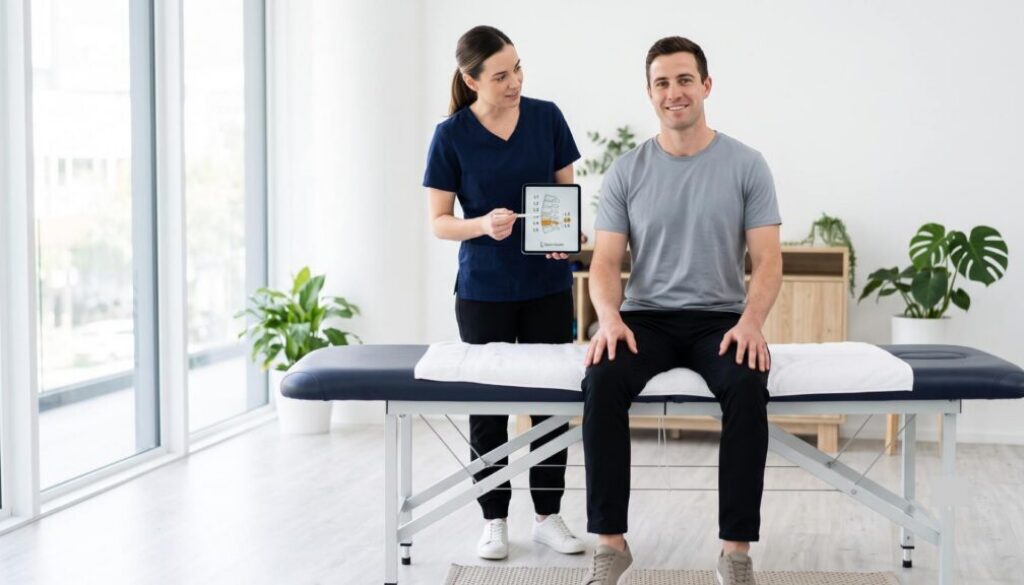
Before starting treatment, a qualified physiotherapist carries out a structured clinical assessment, which typically includes:
- Detailed history taking: Onset, aggravating and relieving positions, and whether pain travels down the leg (a sign of nerve involvement).
- Postural and movement analysis: Observing how you sit, stand, and bend to spot compensations.
- Neurological screening: Testing reflexes, muscle power, and sensation along the dermatomes (skin areas) supplied by L3, L4, L5, and S1 nerve roots.
- Straight leg raise and slump tests: These help confirm whether nerve tissue is being irritated or compressed.
- Reviewing MRI findings: Correlating the imaging report with your actual symptoms is essential, since imaging alone does not tell the whole story. Doctors and physiotherapists look at how the bulge relates to what you are actually feeling before creating a plan.
This assessment guides the entire treatment plan and helps rule out red flag conditions, discussed further below, that need urgent medical attention rather than physiotherapy alone.
Why Physiotherapy Works for Disc Bulge Recovery
Physiotherapy is considered a first-line, evidence-supported approach for disc bulges at L3, L4, and L5 because it addresses the problem from multiple angles rather than just masking pain:
- It reduces pain and inflammation through manual therapy and graded movement, without long-term reliance on medication.
- It restores spinal mobility and flexibility so you can bend, sit, and walk comfortably again.
- It strengthens the deep core and back muscles that support the spine, reducing repeat strain on the disc.
- It corrects posture and movement patterns, such as how you sit, stand, lift, and sleep, which are frequently the root cause of recurring disc problems.
- It gives you an active, self-managed recovery, which research consistently links to better long-term outcomes than passive rest alone.
Clinical case data also supports conservative, physiotherapy-led management even for larger disc issues. In one documented case, a patient with a sizeable L3-L4 disc extrusion causing nerve compression was managed with spinal manipulation, lumbar traction, and a structured home exercise program, and follow-up imaging showed the disc extrusion had resolved without surgery. While every case is different, this reflects a broader clinical pattern: many disc bulges, even significant ones, can improve substantially with the right conservative care.
The Physiotherapy Treatment Approach: Phase by Phase
A well-structured disc bulge physiotherapy treatment plan generally moves through four overlapping phases. The pace of progression is adjusted to your specific level (L3-L4, L4-L5, or L5-S1) and how your nerve symptoms respond.
Phase 1: Pain and Inflammation Control
The first goal is to calm the irritated nerve and reduce pain enough to move safely. Common techniques include:
- Gentle manual therapy and spinal mobilization to ease joint stiffness
- Positional relief techniques, such as lying in a supported, neutral spine position to decompress the disc
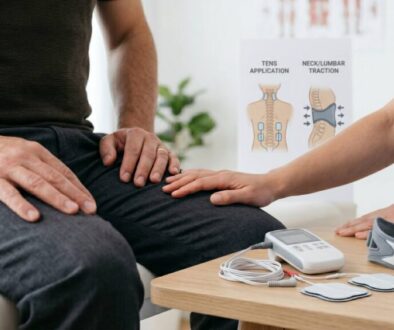
- Electrotherapy modalities like IFT (interferential therapy) or TENS for short-term pain relief where appropriate
- Activity modification advice, not complete bed rest, since prolonged inactivity is now known to slow recovery
Phase 2: Restoring Mobility
Once acute pain settles, treatment shifts toward regaining pain-free movement:
- McKenzie-based extension exercises, such as gentle prone press-ups, are widely used to encourage the disc to move away from the compressed nerve root and reduce leg symptoms
- Nerve gliding or flossing exercises to reduce nerve sensitivity, particularly useful for L4-L5 and L5-S1 bulges with sciatica-type pain
- Gentle stretching of tight hip flexors, hamstrings, and piriformis muscles that often accompany lower lumbar disc problems
Phase 3: Core and Spinal Stabilization
This is the phase that protects against re-injury:
- Core stabilization exercises like pelvic tilts, bird-dogs, and modified planks to build endurance in the deep trunk muscles
- Bridging and glute activation work, since weak gluteal muscles are commonly linked with L4-L5 and L5-S1 disc stress
- Progressive strengthening tailored to your nerve level, for example, extra focus on ankle dorsiflexor strength if there has been L4-L5 involvement, or calf strengthening for L5-S1 cases
Phase 4: Functional Return and Prevention
The final phase focuses on returning safely to work, sport, or daily activities while preventing recurrence:
- Ergonomic correction for sitting, driving, and workstation setup
- Safe lifting mechanics training (hip hinge patterns instead of spinal flexion)
- Sport-specific or job-specific conditioning
- A personalised home exercise program to maintain gains long term
Throughout all four phases, the plan should stay individualised to your MRI findings, nerve level, pain pattern, age, and daily activity demands, rather than following a one-size-fits-all exercise sheet.
The Advantage of Home-Based Physiotherapy for Disc Bulge Recovery
One factor that is often overlooked in generic disc bulge guides is where and how consistently the treatment is delivered. Recovery from a disc bulge depends heavily on regular, correctly performed sessions, and pain or reduced mobility can make travelling to a clinic difficult in the early weeks.
This is where home physiotherapy makes a genuine clinical difference. At Physio at your Doorstep, our physiotherapists assess and treat L3, L4, and L5 disc bulges directly at your home across Bangalore, including areas like JP Nagar, BTM Layout, Jayanagar, Koramangala, HSR Layout, and Whitefield. This means:
- No painful car rides or waiting rooms during acute flare-ups
- Assessment of your actual home setup, such as your mattress, chair, and workstation, which are frequently contributing factors
- Consistent, on-time sessions that support better long-term outcomes
- Comfort and privacy for elderly patients or those with significant mobility restriction
Our Orthopaedic Physiotherapy service covers detailed spinal assessment and disc bulge rehabilitation, and where nerve compression has led to noticeable weakness or altered movement patterns, our Neurological Physiotherapy team also gets involved to address nerve-related deficits. For patients who prefer a hybrid approach, combining an initial home assessment with periodic remote check-ins, our Online Physiotherapy Consultation service allows ongoing guidance between home visits.
Realistic Recovery Timeline
Recovery speed depends on the size of the bulge, which level is involved, how long symptoms have been present, and how consistently the exercise program is followed. As a general guide:
- Weeks 1 to 2: Focus on pain relief and gentle positioning; some improvement in acute symptoms is common
- Weeks 3 to 6: Mobility improves, leg symptoms often start reducing as nerve irritation settles
- Weeks 6 to 12: Core strength and functional capacity build steadily, most people return to normal daily activity
- 3 to 6 months: Continued strengthening for full return to sport or physically demanding work, along with maintenance of postural habits
These timelines are general estimates. L4-L5 and L5-S1 bulges with clear nerve root involvement can sometimes take longer than L3-L4 bulges without significant nerve compression, which is why an individualised assessment matters more than a generic recovery calendar.
When Physiotherapy Alone Is Not Enough: Red Flags to Know
While the large majority of disc bulges respond well to physiotherapy, certain signs need urgent medical evaluation rather than a wait-and-see approach:
- Loss of bladder or bowel control, or numbness in the groin or inner thigh area (saddle anaesthesia), which can indicate cauda equina syndrome, a rare but serious emergency
- Progressive muscle weakness, such as a foot that keeps dropping or a leg that keeps giving way
- Severe, unrelenting pain that does not change with position or rest
- Signs of infection, such as fever combined with worsening back pain
- Significant, unexplained weight loss alongside back pain
If any of these occur, seek immediate medical attention. Otherwise, for the vast majority of L3, L4, and L5 disc bulges, physiotherapy remains the first and most effective line of treatment, with surgery reserved for cases with severe or progressive neurological compromise that does not respond to conservative care.
Simple Do’s and Don’ts While Recovering
Do:
- Keep moving within a pain-free range rather than resting completely
- Sit with proper lumbar support and take standing breaks every 30 to 45 minutes
- Use a hip hinge (bend at the hips, not the spine) when lifting anything from the floor
- Sleep on your side with a pillow between your knees, or on your back with a pillow under your knees
- Follow your physiotherapist’s home exercise program consistently, even on days you feel better
Don’t:
- Avoid prolonged bed rest, which is now known to slow recovery rather than speed it up
- Avoid high-impact twisting movements or heavy lifting in the early recovery phase
- Do not ignore worsening leg weakness or numbness, report it to your physiotherapist or doctor promptly
- Avoid sitting on very soft, unsupportive furniture for long periods
If your disc bulge was linked to a recent injury or a prior surgery, our Post Surgical Physiotherapy team can also help coordinate rehabilitation safely alongside your spine treatment.
Final Thoughts
A disc bulge at L3, L4, or L5 can feel alarming, especially with leg pain or numbness added to the mix, but the research and clinical experience both point in the same direction: most people recover well with a properly structured, level-specific physiotherapy program, without needing surgery. The key is getting an accurate assessment, following a progressive plan through pain relief, mobility, strengthening, and prevention, and staying consistent with your home exercises.
If you are dealing with lower back pain or leg symptoms linked to an L3, L4, or L5 disc bulge, our team at Physio at your Doorstep can assess you at home anywhere across Bangalore and build a treatment plan around your specific MRI findings and symptoms. Book an appointment to get started, or explore our Orthopaedic Physiotherapy service to learn more about how we approach spinal conditions.
Reference: Clinical case data on non-surgical resolution of lumbar disc extrusion, PMC (National Library of Medicine): Non-surgical Restoration of L3/L4 Disc Herniation
This article is for informational purposes and does not replace a personalised medical or physiotherapy assessment. Please consult a qualified physiotherapist or doctor for advice specific to your condition.