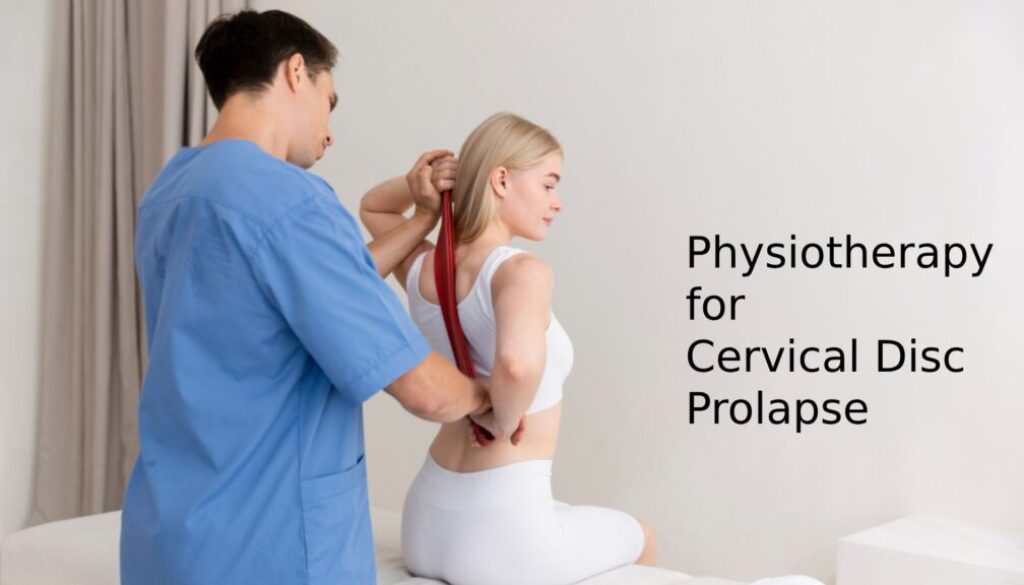
Physiotherapy for Cervical Disc Prolapse: What to Know
Discover how specialized physiotherapy can effectively treat cervical disc prolapse without surgery. Get expert care at home in Bangalore, India.
Introduction
Cervical disc prolapse, commonly affecting millions of Indians, especially those in desk-bound professions in metro city like Bangalore is a debilitating condition that can significantly impact your quality of life. This spinal condition occurs when the soft, gel-like center of a cervical disc pushes through a tear in the tough outer layer, potentially pressing on nearby nerves and causing severe pain, numbness, and weakness.
Early diagnosis and appropriate treatment are crucial for preventing long-term complications and ensuring optimal recovery. While surgical intervention was once considered the primary treatment option, modern evidence-based medicine has shown that physiotherapy for cervical disc prolapse can be remarkably effective in managing symptoms, promoting healing, and restoring function.
Physiotherapy offers a non-invasive, cost-effective approach that addresses both the symptoms and underlying causes of cervical disc prolapse. With personalized treatment plans designed by qualified physiotherapists, patients can experience significant improvement in pain levels, mobility, and overall quality of life. The convenience of receiving expert physiotherapy treatment at home has made recovery more accessible for busy professionals and families across India’s major cities.
What is Cervical Disc Prolapse?
Medical Definition in Simple Terms
Cervical disc prolapse, also known as a herniated or slipped disc in the neck region, occurs when one of the intervertebral discs in the cervical spine (neck area) becomes damaged and its inner content bulges or leaks out. To understand this better, imagine a jelly-filled donut where the outer dough represents the disc’s tough outer layer (annulus fibrosus), and the jelly represents the soft inner core (nucleus pulposus). When the “dough” develops a crack, the “jelly” can squeeze out, potentially pressing on nearby nerves.
The cervical spine consists of seven vertebrae (C1-C7) with discs between C2-C3 through C6-C7. These discs act as shock absorbers and allow for smooth movement of the neck. When a disc prolapses, it can compress spinal nerves or the spinal cord itself, leading to various symptoms.
Causes and Risk Factors
Age-Related Factors:
- Natural disc degeneration typically begins in the 20s
- Reduced water content in discs leads to decreased flexibility
- Higher prevalence among individuals aged 30-50 years
Lifestyle and Occupational Factors:
- Poor posture: Especially common among IT professionals in Bangalore
- Prolonged computer use: Forward head posture strains cervical discs
- Sedentary lifestyle: Weakened neck and shoulder muscles
- Improper sleeping positions: Lack of adequate neck support
Physical Factors:
- Sudden trauma: Motor vehicle accidents, falls, or sports injuries
- Repetitive stress: Occupational activities requiring frequent neck movements
- Heavy lifting: Improper lifting techniques
- Genetic predisposition: Family history of disc problems
Modern Urban Risk Factors in India:
- Increased smartphone usage leading to “text neck”
- Stress-related muscle tension
- Air pollution affecting overall health and healing capacity
Difference Between Disc Bulge, Herniation, and Prolapse
Disc Bulge:
- The disc extends beyond its normal boundary but remains intact
- Typically affects 25-50% of the disc circumference
- Often causes mild to moderate symptoms
Disc Herniation:
- The outer layer tears, allowing inner material to escape
- More localized than a bulge
- Can cause moderate to severe symptoms
Disc Prolapse (Severe Herniation):
- Significant displacement of disc material
- May involve complete rupture of the outer layer
- Often results in severe symptoms and potential nerve compression
Symptoms and Diagnosis
Most Common Symptoms
Primary Symptoms:
- Neck pain: Often described as sharp, burning, or aching
- Radiating pain: Extends from neck to shoulders, arms, or hands
- Numbness and tingling: “Pins and needles” sensation in arms or fingers
- Muscle weakness: Difficulty gripping objects or lifting arms
- Stiffness: Reduced range of motion in the neck
Secondary Symptoms:
- Headaches: Often occurring at the base of the skull
- Muscle spasms: Protective response causing additional pain
- Sleep disturbances: Due to positional pain
- Concentration difficulties: From chronic pain and discomfort
Impact on Daily Life and Mobility
Cervical disc prolapse significantly affects daily activities, particularly for working professionals in India’s major cities:
Work-Related Challenges:
- Difficulty maintaining computer posture for extended periods
- Reduced productivity due to pain and discomfort
- Frequent breaks needed for position changes
- Potential for sick leave and career impact
Personal Life Effects:
- Sleep disruption affecting family relationships
- Reduced participation in social and recreational activities
- Emotional stress and anxiety about chronic pain
Mobility Limitations:
- Restricted neck movement affecting daily tasks
- Difficulty performing household activities
- Challenges in personal care routines
- Reduced exercise capacity and fitness levels
Diagnostic Procedures
Clinical Examination:
- Medical history: Detailed discussion of symptoms and onset
- Physical assessment: Range of motion testing and neurological examination
- Special tests: Spurling’s test, cervical compression test
- Posture evaluation: Assessment of head and neck alignment
Imaging Studies:
- MRI (Magnetic Resonance Imaging): Gold standard for soft tissue visualization
- CT scan: Detailed view of bone structures
- X-rays: Initial assessment to rule out fractures or instability
- Electromyography (EMG): Tests nerve function and muscle response
Advanced Diagnostic Options Available in Indian Metro Cities:
- High-quality imaging centers in Bangalore
- 24/7 diagnostic facilities for urgent cases
- Integration with telemedicine consultations
- Home collection services for certain tests
Why Physiotherapy is Effective for Cervical Disc Prolapse
Benefits Over Surgery and Medication
Non-Invasive Approach: Physiotherapy offers a safe, non-surgical treatment option that avoids the risks associated with cervical spine surgery, including infection, nerve damage, and failed back surgery syndrome. This is particularly important for patients who prefer conservative treatment or are not suitable candidates for surgery.
Comprehensive Treatment: Unlike medications that primarily manage symptoms, physiotherapy addresses both symptoms and underlying causes. This holistic approach includes:
- Pain management through various modalities
- Strengthening of supporting muscles
- Postural correction and ergonomic education
- Movement pattern improvement
- Long-term prevention strategies
Cost-Effectiveness: Physiotherapy is significantly more cost-effective than surgery, making it accessible to a broader population across India. The home-based treatment model further reduces costs by eliminating:
- Hospital stays and associated expenses
- Travel costs to clinics
- Lost work days
- Post-surgical rehabilitation expenses
Evidence-Based Studies
Recent research has demonstrated the effectiveness of physiotherapy for cervical disc prolapse:
Clinical Evidence:
- A 2022 systematic review showed 85% improvement in pain scores with structured physiotherapy programs
- Studies indicate that 80-90% of patients avoid surgery when receiving appropriate physiotherapy
- Research demonstrates significant functional improvement within 6-12 weeks of treatment
Indian Context Studies:
- Studies from AIIMS Delhi show positive outcomes with manual therapy and exercise
- Research from Chennai’s institutes demonstrates effectiveness of home-based physiotherapy
- Evidence from Bangalore physiotherapy clinics supports early intervention benefits
Personalized Treatment Plans
Severity-Based Approach:
- Mild prolapse: Focus on pain management and gentle mobilization
- Moderate prolapse: Comprehensive approach including strengthening and postural correction
- Severe prolapse: Intensive therapy with close monitoring and gradual progression
Individual Factor Consideration:
- Age and fitness level
- Occupation and lifestyle demands
- Concurrent health conditions
- Patient preferences and goals
- Home environment and support system
Physiotherapy Treatment Modalities for Cervical Disc Prolapse
Manual Therapy
Cervical Mobilization: Gentle, passive movements performed by the physiotherapist to improve joint mobility and reduce pain. These techniques include:
- Grade I-IV mobilizations based on pain tolerance
- Specific joint mobilization techniques for C2-C7 segments
- Soft tissue mobilization for muscle tension relief
Manipulation Techniques: High-velocity, low-amplitude thrusts performed by certified physiotherapists to restore normal joint mechanics. These are carefully applied based on:
- Patient assessment and contraindication screening
- Specific joint restrictions identified
- Patient consent and comfort level
Postural Correction
Assessment and Education:
- Detailed postural analysis using digital photography or apps
- Identification of specific postural deviations
- Education about proper sitting, standing, and sleeping positions
- Workplace ergonomic assessment and recommendations
Corrective Exercises:
- Chin tuck exercises for forward head posture
- Upper trapezius stretching
- Deep neck flexor strengthening
- Thoracic spine extension exercises
Cervical Traction
Manual Traction: Applied by the physiotherapist’s hands to decompress cervical discs and reduce nerve pressure:
- Gentle sustained pulls
- Intermittent traction techniques
- Position-specific applications
Mechanical Traction: Using specialized equipment for controlled and measured traction:
- Pneumatic cervical units
- Weight-based traction systems
- Home traction devices for continued treatment
Electrotherapy Modalities
TENS (Transcutaneous Electrical Nerve Stimulation):
- Pain gate mechanism activation
- Endorphin release stimulation
- Portable units for home use
- Customizable intensity and frequency settings
Interferential Therapy (IFT):
- Deep tissue penetration for pain relief
- Improved circulation and healing
- Muscle relaxation effects
- Treatment duration typically 15-20 minutes
Therapeutic Ultrasound:
- Deep heating effects for tissue healing
- Improved blood flow and metabolism
- Collagen synthesis promotion
- Recommended 2-3 times per week
Strengthening Exercises
Deep Neck Flexor Strengthening:
- Craniocervical flexion exercises
- Progressive resistance training
- Endurance-based protocols
- Functional movement integration
Upper Body Strengthening:
- Rhomboid and middle trapezius exercises
- Posterior deltoid strengthening
- Serratus anterior activation
- Core stability training
Ergonomic Advice and Workplace Modification
Computer Workstation Setup:
- Monitor height and distance optimization
- Keyboard and mouse positioning
- Chair adjustment for proper support
- Lighting and glare reduction
Home Environment Modifications:
- Pillow selection and sleeping position
- Television viewing setup
- Kitchen counter height adjustments
- Reading position recommendations
Recovery Timeline and Progress Expectations
Week 1-2: Acute Phase Management
Primary Goals:
- Pain reduction and inflammation control
- Gentle mobility restoration
- Patient education and safety awareness
Expected Outcomes:
- 20-30% reduction in acute pain
- Improved sleep quality
- Basic daily activities with modifications
- Understanding of condition and treatment plan
Treatment Focus:
- Ice therapy and positioning
- Gentle range of motion exercises
- Basic postural awareness
- Pain management strategies
Month 1: Early Recovery Phase
Primary Goals:
- Significant pain reduction
- Improved cervical mobility
- Introduction of strengthening exercises
- Workplace and activity modifications
Expected Outcomes:
- 50-60% improvement in pain levels
- Return to modified work activities
- Increased confidence in movement
- Established home exercise routine
Treatment Progression:
- Manual therapy intensification
- Progressive exercise introduction
- Ergonomic implementation
- Activity modification refinement
Month 3: Functional Recovery Phase
Primary Goals:
- Return to full activities
- Prevention strategy implementation
- Long-term maintenance planning
- Complete symptom resolution
Expected Outcomes:
- 80-90% symptom improvement
- Full return to work and recreation
- Independent exercise program management
- Confidence in long-term management
Treatment Focus:
- Advanced strengthening exercises
- Sport-specific or work-specific training
- Prevention education
- Maintenance program development
Role of Home Exercises and Patient Compliance
Critical Success Factors:
- Consistent daily exercise performance
- Proper technique maintenance
- Progressive challenge adaptation
- Regular physiotherapist communication
Compliance Strategies:
- Simple, easy-to-follow exercise programs
- Video demonstrations and written instructions
- Regular progress monitoring
- Family involvement and support
Do’s and Don’ts for Patients
Do’s: Positive Lifestyle Changes
Daily Activity Management:
- Maintain good posture throughout the day
- Take frequent breaks from prolonged sitting (every 30-45 minutes)
- Use proper ergonomics at workstation and home
- Sleep with adequate neck support using appropriate pillows
- Stay hydrated to maintain disc health
- Perform prescribed exercises consistently
- Apply ice during acute flare-ups (15-20 minutes)
- Wear supportive clothing that doesn’t restrict movement
Exercise and Movement:
- Start with gentle movements and progress gradually
- Warm up before exercises with light neck movements
- Cool down after activities with gentle stretches
- Maintain regular physical activity appropriate to your condition
- Practice stress management techniques like deep breathing
Don’ts: Activities to Avoid
Movement Restrictions:
- Avoid sudden neck movements or “cracking” your neck
- Don’t sleep on your stomach which strains the neck
- Avoid heavy lifting above shoulder level
- Don’t ignore warning signs of worsening symptoms
- Avoid prolonged static positions without breaks
- Don’t use multiple pillows that force neck into flexion
- Avoid high-impact activities during acute phases
Lifestyle Modifications:
- Don’t smoke as it impairs healing and disc health
- Avoid excessive alcohol which can affect balance and healing
- Don’t rely solely on pain medications without addressing underlying issues
- Avoid stress-inducing activities that cause muscle tension
When to Seek Immediate Medical Attention
Red Flag Symptoms:
- Severe, sudden onset neck pain following trauma
- Numbness or weakness in both arms simultaneously
- Loss of bladder or bowel control
- Severe headache with neck stiffness
- Difficulty walking or balance problems
- Progressive weakness despite treatment
- Severe pain unrelieved by position changes or medication
Emergency Situations: These symptoms may indicate serious complications requiring immediate medical evaluation at hospitals or your nearest emergency facility.
Success Factors in Home Treatment
Personalized Care:
- One-on-one attention from qualified physiotherapists
- Treatment adapted to home environment
- Family involvement in recovery process
- Flexible scheduling around work commitments
Comprehensive Approach:
- Assessment of actual living and working environments
- Real-time ergonomic modifications
- Integration of treatment into daily routines
- Continuous monitoring and adjustment
Why Choose “Physio At Your Doorstep” for Cervical Disc Prolapse?
Expert Physiotherapists Available at Home
Qualified Professionals: Our team consists of licensed physiotherapists with specialized training in spinal conditions:
- Bachelor’s/Master’s degrees in Physiotherapy
- Specialized certification in manual therapy
- Ongoing education in the latest treatment techniques
- Experience with cervical disc conditions
Specialized Expertise:
- Advanced manual therapy techniques
- Modern electrotherapy equipment
- Customized exercise prescription
- Ergonomic assessment capabilities
- Patient education and counseling skills
Service Availability
- Bangalore: Complete coverage including Electronic City, Whitefield, Koramangala, and all major areas
Service Features:
- 7-day-a-week availability
- Emergency consultation options
- Flexible timing, including evenings and weekends
- Multiple physiotherapist options
- Bilingual communication (English and regional languages)
Benefits of Home-Based Physiotherapy
Convenience and Comfort:
- No travel time or traffic hassles in busy Indian cities
- Treatment in familiar environment reduces anxiety
- Family involvement in recovery process
- Flexible scheduling around work and family commitments
- No waiting rooms or clinic delays
Personalized Care:
- Undivided attention from the physiotherapist
- Real-time environmental modifications in home and workplace
- Customized equipment recommendations for home use
- Privacy and comfort during treatment sessions
Cost-Effective Solution:
- No transportation costs for multiple visits
- Reduced time away from work
- Family can observe and learn techniques for support
- Competitive pricing compared to clinic visits plus travel
Quality Assurance and Trust
Professional Standards:
- Rigorous physiotherapist screening and selection
- Regular training and skill updates
- Patient feedback and quality monitoring
- Professional indemnity insurance coverage
Technology Integration:
- Digital assessment and progress tracking
- Exercise video libraries and instructions
- Direct communication with physiotherapist
- Treatment plan sharing with family doctors
Internal Links to Related Services
For comprehensive spinal health management, explore our related services:
Back Pain Physiotherapy
- Lumbar disc problems
- Sciatica treatment
- Postural back pain
- Work-related back injuries
Neck Pain Physiotherapy
- General neck pain and stiffness
- Whiplash injury recovery
- Tension headaches
- Acute torticollis
Cervical Spondylosis Treatment
- Age-related cervical changes
- Bone spur management
- Arthritis-related neck pain
- Degenerative disc disease
Home Visit Physiotherapy
- Post-surgical rehabilitation
- Elderly care physiotherapy
- Neurological conditions
- Sports injury recovery
Workplace Ergonomics Assessment
- Workstation setup optimization
- Corporate wellness programs
- Injury prevention strategies
- Productivity enhancement
Take the First Step Towards Recovery Today
Don’t let cervical disc prolapse limit your life any longer. Our expert physiotherapists are ready to provide comprehensive, evidence-based treatment in the comfort of your home across Bangalore.
Book Your Home Physiotherapy Session
Looking for cervical spine physiotherapy at home? Book a session with us today and get expert care at your doorstep.
Benefits of choosing us:
- Qualified and experienced physiotherapists
- Convenient home-based treatment
- Personalized care plans
- Modern equipment and techniques
- Flexible scheduling
- Competitive pricing
Contact Information:
- Website: physioatyourdoorstep.com
- Book Appointment: Schedule Your Session
- Emergency Consultation: Available 24/7
- Service Areas: Bangalore
Special Offers:
- Free initial consultation and assessment
- Discounted packages for ongoing treatment
- Corporate wellness program options
- Family physiotherapy plans
Take control of your health today. Your journey to pain-free living starts with a single click or call.
References and Resources
Medical and Scientific Sources:
- Mayo Clinic – Cervical Disc Disease and Treatment Guidelines
- PubMed Studies on Physiotherapy for Cervical Prolapse:
- “Effectiveness of Manual Therapy and Exercise for Cervical Radiculopathy” – Journal of Orthopedic & Sports Physical Therapy, 2023
- “Conservative Management of Cervical Disc Herniation: A Systematic Review” – Spine Journal, 2022
- Indian Journal of Physiotherapy and Occupational Therapy
- Research on Indian population-specific treatment outcomes
- Cultural considerations in physiotherapy practice
- Government Health Resources:
- AIIMS Delhi – Spine Care Guidelines and Research
- ICMR – Indian Council of Medical Research publications on spinal health
- Ministry of Health & Family Welfare – National health guidelines
- Professional Organizations:
- Indian Association of Physiotherapists (IAP)
- International Federation of Orthopedic Manipulative Physical Therapists (IFOMPT)
- American Physical Therapy Association (APTA) guidelines
Additional Reading:
- “Cervical Spine: Clinical Assessment and Management” – Professional textbook references
- WHO guidelines on non-communicable disease management
- Evidence-based practice guidelines for manual therapy
This article is for educational purposes only and should not replace professional medical advice. Always consult with qualified healthcare providers for diagnosis and treatment recommendations specific to your condition.